
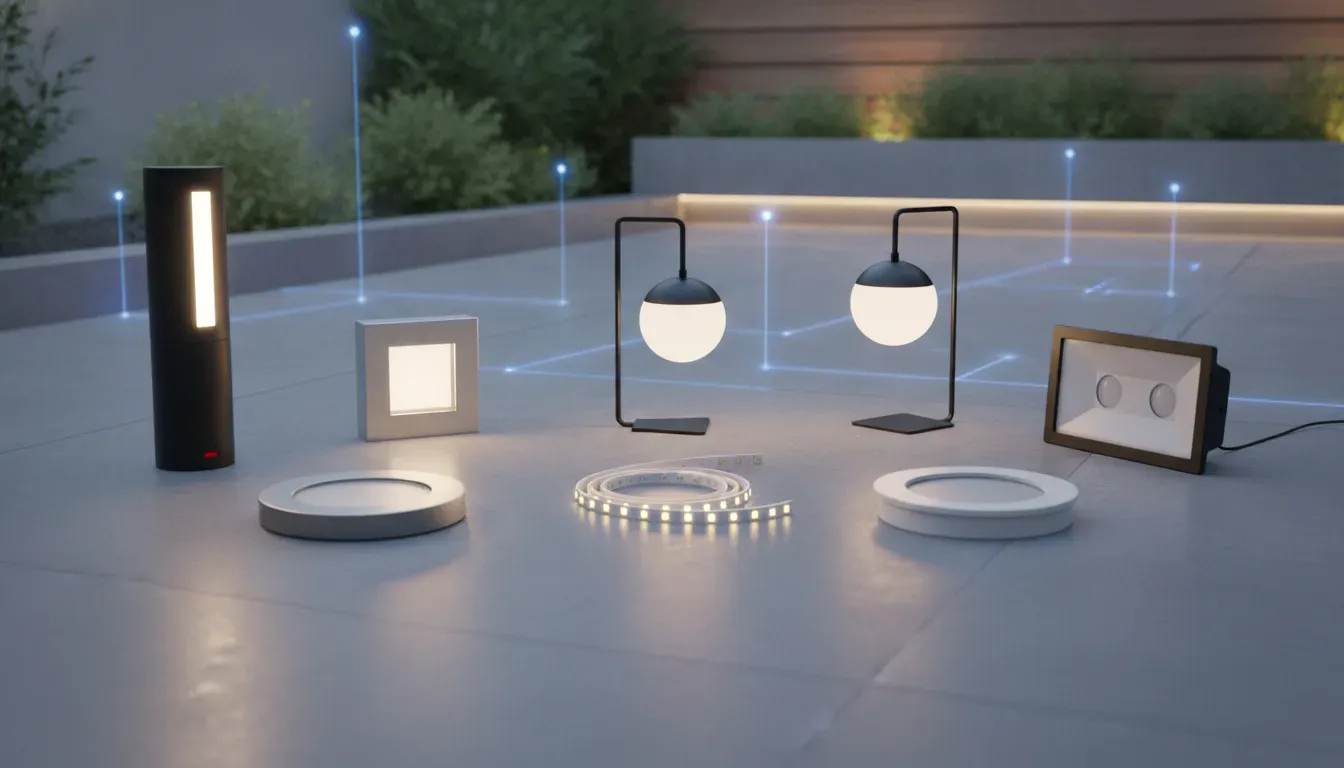
7 Best Smart Outdoor Lighting Options Compared
A few connected fixtures may be enough for a porch or compact patio, but whole-property lighting requires a more careful plan. Smart outdoor lighting should work with your home, not operate as a collection of disconnected products. Think about the areas you want to light, including driveways, walkways, stairs, gardens, patios, pools, and entryways. Then consider how each zone should function. You may want soft, warm light near seating areas, brighter illumination along steps, and motion activation near a side gate. Professional design can help coordinate fixture placement, transformer capacity, cable routes, app controls, and voice commands for a cleaner, more dependable result.
Key Takeaways
Start with your outdoor priorities: Decide whether safety, security, curb appeal, comfort, or entertaining matters most, then plan lighting for each area accordingly.
Compare the entire system: Review fixture quality, brightness, weather resistance, wiring, smart-home compatibility, controls, installation, maintenance, and room for future additions.
Choose the right installation approach: DIY fixtures may suit smaller spaces, while a professionally designed low-voltage system can provide cleaner wiring, better coverage, separate zones, and coordinated control with patio shades and outdoor entertainment.
Compare the Best Smart Outdoor Lighting Options
The best smart outdoor lighting system depends on more than the fixture’s app. Your property size, lighting goals, wiring, smart-home platform, and plans for future expansion all matter. A few plug-in fixtures may work well for a small patio, while a larger property often benefits from a professionally designed low-voltage system with separate zones and durable outdoor components.
Before comparing brands, decide what you want the lighting to do. Are you trying to improve curb appeal, make pathways safer, add security around dark areas, or create a more comfortable setting for outdoor entertaining? A clear goal makes it easier to choose the right fixtures, controls, and installation approach.
It also helps to consider how your outdoor areas connect. Lighting around the front entry may need different controls from lighting around a pool, patio, or driveway. You may want brighter illumination for arrival and safety, but softer light for dining or relaxing. A zoned system lets you manage these areas separately instead of treating the entire property as one space.
For many homeowners, the choice comes down to convenience versus customization. DIY smart fixtures can be quick to install and easy to move, while a professionally designed system can provide better coverage, cleaner wiring, and a consistent look across the property. Compare the complete setup, not just the cost of an individual light.
Explore Outdoor Lights + Shades’ Custom Low-Voltage Smart Landscape Lighting
Outdoor Lights + Shades designs custom low-voltage lighting systems for homeowners who want more than a few connected bulbs. A professional plan can combine pathway lights, uplights, wall-wash fixtures, step lights, tree lighting, and architectural accents into one coordinated system.
Low-voltage landscape lighting can also be divided into independently controlled zones. That means you can illuminate an entryway without turning on every light around the property, or create a softer patio scene for dinner and a brighter setting for cleaning and security. Smart controls can add schedules, remote access, and voice commands when compatible equipment is selected.
Because fixture placement affects both appearance and safety, professional design is especially useful for properties with mature landscaping, long driveways, retaining walls, pools, or multiple outdoor living areas. A lighting specialist can account for sightlines, glare, shadows, and the way plants may grow over time.
Browse the Outdoor Lights + Shades gallery to see examples of custom outdoor lighting and connected exterior spaces. A consultation can also help you determine whether your property is better suited to a simple installation or a multi-zone system.
Consider Philips Hue Outdoor Fixtures With a Hue Bridge
Philips Hue offers outdoor fixtures such as path lights, spotlights, wall lights, and floodlights. The system can appeal to homeowners who already use Hue indoors and want one familiar app for both interior and exterior lighting. Many Hue features require a Hue Bridge, so check the equipment requirements before choosing individual fixtures.
Hue is also known for adjustable white light and full-color options. These features can help create different scenes for everyday use, holidays, parties, or quiet evenings outdoors. However, individual fixtures may not provide the same design flexibility as a complete landscape lighting plan, particularly on larger properties.
Review the manufacturer’s outdoor lighting options to compare fixture types, compatibility, and installation requirements. Pay close attention to how each product connects, where the bridge must be located, and whether the system can cover the areas you want to light.
You should also consider power access and distance from the home. A bridge may communicate with fixtures through its own wireless network, but walls, landscaping, and property size can affect performance. Confirm that the system supports the number and placement of lights you have in mind before purchasing.
Use WiZ Outdoor Fixtures for DIY App Control
WiZ outdoor products may suit homeowners who prefer a simpler, do-it-yourself setup. Depending on the product, WiZ fixtures can connect through a home Wi-Fi network and operate through the WiZ app, without requiring a separate lighting hub. This can make them practical for a balcony, small patio, entryway, or other compact area.
The tradeoff is that Wi-Fi coverage and outdoor power access become especially important. A fixture may work reliably near the home but lose its connection at the far end of a yard. Before purchasing, confirm the product’s weather rating, power requirements, placement limitations, and compatibility with your preferred voice assistant.
WiZ provides an overview of its outdoor lighting products, including options for different applications. Check whether each product is intended for permanent outdoor installation or temporary use, and verify that nearby outlets and extension cords are suitable for exterior conditions.
DIY lighting can be a good starting point, but larger installations may require additional planning for cable routing, transformer capacity, fixture spacing, and consistent design. If you expect to add more lights later, choose products and controls that can support that expansion.
Compare Professional Low-Voltage Systems With Individual Smart Fixtures
Individual smart fixtures are convenient, but they are not always the best choice for an entire property. A professional low-voltage system typically uses a transformer, outdoor-rated cable, weatherproof connections, and multiple fixtures designed to work together. This approach can provide more consistent illumination across pathways, landscaping, walls, and outdoor structures.
A custom system also makes it easier to control separate areas independently. You might use one zone for the front entry, another for the driveway, and a third for the patio and pool area. Professional installation can help prevent common issues such as excessive glare, uneven brightness, exposed wiring, or fixtures that shift out of alignment.
When comparing options, look beyond the price of one fixture. Consider the full installation, including design, wiring, transformer capacity, controls, programming, and future service. Ask how the installer will protect cable connections, manage voltage across long runs, and make repairs if a fixture stops working.
The Outdoor Lights + Shades FAQ can help answer common questions before you schedule a consultation. A professional can then review your property and explain which system type fits your layout, goals, and budget.
Choose Pathway, Accent, Wall-Wash, Flood, Security, String, or Permanent Lights
Each fixture type serves a different purpose. Pathway lights guide people along walkways and driveways, while accent lights highlight trees, planters, sculptures, and architectural details. Wall-wash fixtures spread light across a broad surface, and spotlights create a narrower beam for drawing attention to a specific feature.
Floodlights can cover larger areas for visibility and security, although poor placement can create glare or shine into neighboring windows. String lights bring a relaxed, decorative feel to patios and pergolas. Permanent lighting systems can provide an integrated look for rooflines, entertaining areas, and seasonal scenes.
Start with the function of each area rather than choosing fixtures based only on appearance. A well-designed plan often combines several fixture types, using softer illumination for ambiance and brighter, carefully directed light where people walk, park, enter, or gather.
Fixture placement matters as much as fixture style. Path lights spaced too closely together can look busy, while widely spaced lights may leave dark gaps. Uplights should emphasize trees and architecture without shining toward windows or seating. A lighting professional can balance brightness, beam direction, and spacing across the entire property.
Match Lighting to Driveways, Patios, Gardens, Pools, Entryways, and Entertaining
Outdoor lighting should follow the way you use your property. Driveways need even visibility without harsh glare, while entryways benefit from clear light near steps, doors, house numbers, and locks. Pathway fixtures should guide movement without creating bright spots that make darker areas harder to see.
Patios, gardens, and pool areas call for a more layered approach. Use accent lighting to show off plants and hardscape, then add practical light near seating, cooking, and serving areas. Around pools, select properly rated fixtures and keep wiring, transformers, and connections away from water exposure wherever possible.
For entertaining, consider scenes that change with the occasion. A brighter setting can help during meal preparation, while warmer, lower lighting may feel more comfortable during dinner. You might also create separate scenes for arriving home, hosting guests, relaxing, or securing the property at night.
Outdoor Lights + Shades can coordinate lighting with automated patio shades and outdoor living systems, helping the space remain comfortable as sunlight, temperature, and activity change. This approach is especially useful when your patio includes seating, dining, an outdoor kitchen, or audio and video equipment.
Compare Controls, Installation, Compatibility, Expansion, and Support
A smart lighting system is only useful if it works reliably and remains manageable after installation. Compare app quality, scheduling, remote access, voice control, zone management, and the ability to share access with other household members. Also check whether the system depends on a hub, bridge, controller, or strong Wi-Fi signal.
Installation requirements deserve equal attention. Individual fixtures may plug into existing outlets, while low-voltage landscape lighting often requires a transformer, buried cable, weatherproof connections, and careful fixture placement. Ask whether the system can work with your existing smart-home platform and whether controls remain available if the internet connection is interrupted.
If the system will expand later, confirm that the transformer and controller can support additional zones or fixtures. It is usually easier and less expensive to plan for future capacity during the initial installation than to replace undersized equipment later.
Finally, review warranty coverage, replacement parts, technical support, and service options. A professional installer should explain how the system works, identify maintenance needs, and provide a plan for adjustments or repairs. For larger projects, ask about customer financing options so you can compare a complete design and installation with the cost of assembling separate products yourself.
Compare Smart Outdoor Lighting Features
The best smart outdoor lighting system does more than turn fixtures on from your phone. It should provide enough light for each area, complement your landscape, withstand local weather, and remain simple to control as your needs change. A decorative fixture may look attractive but provide too little light for a dark walkway. A powerful floodlight may improve visibility but create harsh glare across a patio or into a neighbor’s windows.
Start by comparing the features that affect everyday performance: brightness, beam spread, color temperature, dimming, connectivity, weather resistance, wiring, and serviceability. Then consider how those features work together across your property. A smart system should create a consistent experience from the driveway to the backyard, not a collection of unrelated fixtures with separate apps and controls.
Your property layout should guide the equipment you choose. A front entry may need warm, welcoming light, while a side gate may benefit from motion activation. A patio might require dimmable ambient lighting, and trees or architectural details may look best with focused accent fixtures. Separating these areas into zones gives you more control and makes schedules easier to manage.
Professional design can also address cable routes, transformer capacity, glare, fixture placement, and future expansion before installation begins. Outdoor Lights + Shades combines custom landscape lighting with smart controls and professional installation for homeowners in Los Angeles, the Temecula Valley, and the Dallas Metroplex. You can view the company’s outdoor lighting and shade solutions to see how a coordinated system can support comfort, safety, and nighttime entertaining.
Compare Brightness, Lumens, Beam Spread, Dimming, and Glare Control
Lumens indicate how much light a fixture produces, but a higher lumen rating does not automatically make a light better. The right output depends on the fixture’s height, beam angle, mounting position, surface color, and purpose. Path lights generally need a softer spread, while a spotlight aimed at a tree or architectural feature may need a narrower, more concentrated beam.
Compare the beam spread as well as the lumen rating. A wide beam can cover a planting bed or wall, while a narrow beam can highlight a column, tree trunk, or architectural feature. Dimming is equally important because brightness needs often change throughout the evening.
Look for adjustable heads, shields, hoods, and frosted lenses that help control glare. Independent dimming by zone is useful when you want brighter entry lighting and softer illumination around a seating area.
Choose Warm White, Adjustable Color Temperature, or Full-Color Lighting
Warm white lighting, often around 2700K to 3000K, creates a comfortable look for patios, entryways, gardens, and architectural details. It also complements natural materials such as stone, brick, wood, and plants. For many homes, warm white is a practical everyday setting that feels inviting without making the property appear overly bright.
Adjustable white fixtures let you change the color temperature for different areas or occasions. Cooler settings may suit task-oriented areas, while warmer settings tend to feel more relaxed near outdoor seating. Full-color lights add creative options for parties, holidays, and special events, but they should not replace sound everyday lighting design.
Before choosing color-changing fixtures, confirm that the system can return easily to a consistent white setting. Also check whether color changes apply to individual zones or the entire property. You can view examples in the Outdoor Lights + Shades gallery.
Set Scenes, Schedules, Timers, Motion Sensors, and Geofencing
Smart controls let you create lighting scenes for everyday use, entertaining, security, and vacation schedules. For example, pathway lights can turn on at sunset, accent lights can dim later in the evening, and entry lights can brighten when motion is detected. Timers and schedules reduce the need to adjust fixtures manually each night.
Geofencing can activate a scene when your phone enters or leaves a defined area. Its reliability depends on location services, network access, and the platform you use, so test it before relying on it as your only control. Motion sensors work well near side gates, driveways, and service areas, but adjust their sensitivity to reduce activation from pets, passing cars, or moving branches.
Ask where settings are stored. Some systems rely on a cloud service, while others keep key functions in a local controller. Local control can help maintain basic operation during an internet outage.
Control Zones Through Apps, Remote Access, and Shared Household Accounts
A property rarely needs every fixture to operate in the same way. Dividing lights into zones lets you manage the front entry, driveway, backyard, pool area, garden, and patio separately. This gives you more precise control and prevents a late-night adjustment in one area from changing the entire property.
Check whether the app supports remote access, multiple users, customized permissions, and shared household accounts. You may want family members to activate scenes without giving them access to system settings or account information. Clear zone names, such as “Front Walk” or “Pool Patio,” also make daily control easier.
Confirm whether the system supports basic operation if the internet temporarily goes down. Some systems may continue scheduled routines locally, while others require an active connection. A professionally planned control system can keep zones organized and make it easier to add fixtures or revise scenes later.
Compare Wi-Fi, Bluetooth, Hubs, Bridges, Controllers, and Matter Support
Smart outdoor lighting can connect through Wi-Fi, Bluetooth, a dedicated hub, a bridge, or a central landscape-lighting controller. Wi-Fi fixtures may be convenient for a small installation, but distant fixtures can struggle when the signal must pass through walls or travel across a large yard. Bluetooth generally works best nearby, while hubs and controllers can provide more centralized management.
Matter support may improve compatibility among smart-home platforms, but it does not remove the need to check product requirements. Review the official Matter setup guidance, then confirm which features work with Amazon Alexa, Google Home, Apple Home, or Samsung SmartThings.
A system may support basic on and off commands through a third-party platform while reserving advanced scenes, color settings, and zone control for its own app. Also check whether the system requires a separate bridge or hub, and whether that device must remain connected to your home network.
Check IP Ratings, Weather Resistance, Materials, and Outdoor Components
Outdoor fixtures need protection from rain, irrigation, dust, humidity, heat, and temperature changes. An IP rating describes resistance to solid particles and water, but the rating is only one part of the comparison. Examine the fixture housing, lens, seals, connectors, mounting hardware, and cable connections as a complete system.
Materials matter as well. Powder-coated aluminum, brass, and stainless steel can offer different combinations of durability, appearance, and maintenance needs. Confirm that the transformer, controller, junction boxes, and connectors are also rated for outdoor use. A weather-resistant fixture can still develop problems if its connections are exposed or installed incorrectly.
The International Electrotechnical Commission’s IP code overview explains how these ratings classify protection. Your local conditions still matter, including intense sun, coastal moisture, irrigation spray, and temperature changes. Ask how fixtures and connections should be cleaned, inspected, and protected over time.
Evaluate Low-Voltage Power, LED Efficiency, Wiring, and Serviceability
Most landscape lighting uses low-voltage power, which supports flexible placement and is generally well suited to residential outdoor applications. The system still needs properly sized cable, a transformer with enough capacity, secure connections, and appropriate electrical protection. Adding fixtures later may require additional transformer capacity or changes to the wiring layout.
LED fixtures typically use less energy and last longer than older lamp technologies, but replacement planning still matters. Ask whether the LED module, lens, connector, and fixture can be serviced individually, or whether the entire unit must be replaced. Parts availability can affect long-term maintenance costs.
Clear wire paths and accessible connections make future repairs easier. Professional installation can also help prevent voltage drop, uneven brightness, and loose connections across larger properties. Before installation, ask where the transformer and controller will be placed, how cables will be labeled, and whether the system can accommodate future zones.
Improve Pathway Safety With Proper Placement, Glare Control, and Landscape Design
Good pathway lighting should help people see changes in elevation, steps, edges, and obstacles without making the walkway look like a runway. Stagger fixtures instead of placing them in a rigid line, and avoid aiming lights directly toward approaching guests. Keep beams controlled so they illuminate walking surfaces rather than windows, seating areas, or neighboring homes.
Lighting should work with the landscape, not compete with it. Use softer fixtures near planting beds, focused accents for trees and walls, and brighter output only where visibility requires it. Trim vegetation that blocks light, and check how shadows change as plants grow. Pool decks, stairs, and uneven surfaces may need closer attention during the design process.
For broader guidance on responsible outdoor illumination, review DarkSky’s outdoor lighting principles. A site assessment from Outdoor Lights + Shades can help align safety, curb appeal, and nighttime comfort across the property.
Connect Smart Outdoor Lighting to Your Smart Home
Smart outdoor lighting becomes more useful when it works with the rest of your home instead of operating as a separate system. With the right setup, you can adjust landscape lights from your phone, turn on pathway lighting with a voice command, or create routines that respond to sunset, motion, or your arrival home.
Start by deciding how you want to use the system. A homeowner who wants simple app control may need a different setup from someone who wants lighting to coordinate with security cameras, automated patio shades, and outdoor entertainment. Schedules, sensors, and independently controlled zones can also help prevent every fixture from running at full brightness all night.
Compatibility matters as much as appearance. Some products connect directly through Wi-Fi or Bluetooth, while others require a bridge, hub, or dedicated controller. Professional low-voltage systems may provide more dependable control across larger properties, particularly when fixtures are spread between driveways, gardens, patios, and pool areas. The Matter smart home standard can simplify compatibility between supported devices, but you should still confirm that each product works with your preferred platform.
Compare Amazon Alexa, Google Assistant, Apple Home, Samsung SmartThings, and Matter
Begin with the smart-home platform your household already uses. Amazon Alexa, Google Assistant, Apple Home, and Samsung SmartThings can provide voice control, schedules, and scenes, but compatibility varies between brands and product lines. A light that works with Alexa may not offer the same features through Apple Home or SmartThings.
Matter is designed to help supported devices work across different ecosystems. However, Matter compatibility does not guarantee that every feature will be available on every platform. Color controls, motion triggers, dimming, and advanced scenes may still depend on the manufacturer’s app or controller.
Ask whether the lighting system supports your actual devices, not just the platform name printed on the box. Outdoor Lights + Shades can help plan a connected system around your preferred voice assistant, phone, and existing home automation equipment.
Control Lights by Phone, Voice, Remote Access, and Automated Routines
A smart lighting system should give you several practical control options. An app can let you adjust brightness, activate individual zones, change colors, or turn lights off without walking outside. Voice commands are useful when you are carrying groceries, hosting guests, or relaxing on the patio.
Remote access lets you turn on entry lighting before arriving home or check whether a lighting zone was left on. Automated routines make those controls more consistent. Set pathway lights to turn on at sunset, dim entertaining areas later in the evening, or activate selected fixtures when motion is detected.
The US LED guide to smart lighting and IoT integration explains how connected lighting can combine smartphones, sensors, and voice assistants for remote control and automation. Keep your first routines simple, then add more triggers once you know how the system behaves.
Confirm Hub, Bridge, Controller, Account, and Network Requirements
Not every smart outdoor light connects directly to your home Wi-Fi. Some fixtures use Bluetooth for nearby control, while others require a bridge or hub that communicates with the lights. A professional low-voltage system may use a dedicated controller to manage zones, schedules, dimming, and outdoor-rated equipment.
Check what is included before purchasing. You may need a separate bridge, an electrical outlet near the controller, a manufacturer account, or a compatible smart-home hub. Also confirm whether the system requires a 2.4 GHz Wi-Fi connection, cloud access, or an internet connection for remote control.
These requirements can affect equipment placement. A controller installed inside a distant garage may struggle to communicate with fixtures at the front of the property. Planning controller placement during the design stage helps prevent weak connections and unnecessary changes later.
Connect Lighting With Cameras, Doorbells, Locks, and Motion Sensors
Smart lighting can work with security devices to make outdoor areas more responsive. For example, a motion sensor near a side gate could activate pathway lights, while a camera or doorbell event could trigger entry lighting. Smart locks may also start a welcome scene when you unlock the front door.
Use these automations thoughtfully. Bright lights that activate for every small movement can become irritating and may disturb neighbors. Instead, create separate responses for different locations and times. A low-level pathway scene may work well overnight, while brighter lighting can be reserved for activity near gates, stairs, or entryways.
As Daisy’s outdoor lighting guide explains, lighting routines can interact with cameras and sensors to create a more responsive system. Your installer should also position fixtures so they improve visibility without creating glare or washing out camera images.
Coordinate Lighting With Automated Patio Shades and Outdoor Audio/Video
A connected outdoor space can respond to the way you use it. As the sun sets, pathway and landscape lighting can gradually turn on while motorized patio shades lower to reduce glare and heat. When you start an outdoor movie, the entertainment area can shift to a softer lighting scene without affecting stairs, walkways, or security zones.
These scenes work best when each system has a clear role. Patio shades can manage sun and comfort, lighting can define circulation and seating areas, and audio/video equipment can support entertaining. Avoid linking every device to one complicated routine, since a small change could affect the entire outdoor experience.
Outdoor Lights + Shades designs and installs lighting, automated shades, and outdoor audio/video as part of a coordinated plan. This approach makes it easier to place controls where you need them and create scenes that suit patios, pool areas, dining spaces, and outdoor kitchens.
Maintain Reliable Connections Across Large Properties and Wi-Fi Dead Zones
Large lots often have weak Wi-Fi coverage, especially between the main house and detached garages, pool equipment, gardens, or distant entry points. A fixture may appear compatible with your platform but still perform poorly if the signal cannot reach it reliably.
A mesh Wi-Fi system, wired access point, or dedicated lighting hub can help extend coverage. In some cases, a professional controller and low-voltage wiring provide a more dependable solution than relying on individual Wi-Fi fixtures throughout the property. Keep network equipment away from metal enclosures and place hubs where they have a clear path to the areas they serve.
Test connectivity from the actual installation locations, not just from inside the home. The Daisy guide to smart outdoor lighting recommends mesh systems or dedicated hubs for properties where distance creates connection problems. Reliable control is particularly important for entry, stair, and security lighting.
Protect Privacy, Accounts, Power Access, and Local Controls
Connected outdoor lighting still needs basic security precautions. Use strong, unique passwords for lighting and smart-home accounts, enable multifactor authentication when available, and limit access to household members who need it. Review app permissions and remove old users after a property sale, contractor visit, or change in household access.
Protect the physical equipment, too. Controllers, transformers, and network devices should be installed in secure, weather-protected locations with appropriate electrical protection. Keep power supplies accessible for service, but avoid placing them where children, irrigation, or standing water can reach them.
Plan for local control if the internet goes down. A wall switch, remote, timer, or controller-based override can keep essential pathway and security lighting working without cloud access. Strong account security and thoughtful equipment placement help preserve both convenience and control, as outlined in this smart lighting security guide.
Prepare for Smart Outdoor Lighting Installation
A smart outdoor lighting system works best when the design, wiring, controls, and landscape all support one another. Before choosing fixtures, walk the property after sunset and note what you want to highlight, where people walk, and which areas need better visibility. This early planning can prevent harsh glare, uneven brightness, weak connections, and hard-to-reach cables.
Start by identifying your main goals: curb appeal, pathway safety, security, entertaining, or a combination of these. Then consider how you want the system to operate. For example, pathway lights could turn on at sunset, accent lights could highlight trees, and a patio scene could coordinate lighting with automated shades and outdoor audio/video.
Outdoor Lights + Shades serves homeowners in the Los Angeles area, Temecula Valley, and Dallas Metroplex. Its design and installation services account for your property layout, existing electrical setup, landscape, climate, and preferred smart-home controls.
Start With a Site Assessment, Lighting Plan, and Fixture Layout
Begin with a full site assessment instead of placing fixtures wherever an outlet is nearby. Note driveways, walkways, steps, retaining walls, trees, planting beds, fences, pools, patios, entry doors, and areas that become difficult to see after dark. Also locate outlets, electrical panels, irrigation lines, drainage paths, and areas with strong or weak Wi-Fi coverage.
Next, create a fixture layout. Mark possible locations for path lights, uplights, downlights, wall washes, spotlights, and security fixtures. Aim light at a surface or landscape feature rather than directly toward windows, neighbors, or drivers. This reduces glare and creates a more comfortable effect.
Consider the view from inside the home, too. A softly lit entryway or tree can improve the view from a living room without making the yard look overlit. Outdoor Lights + Shades can help balance appearance, safety, and everyday use. Its outdoor lighting gallery offers examples of how different fixture types can shape an outdoor space.
Divide the Property Into Independently Controlled Zones
Separate the property into zones based on location and purpose. A front-entry zone might include the driveway, walkway, porch, and address marker. A backyard zone could cover the patio, pool area, garden, and seating spaces. Side yards, gates, and access paths may need separate controls for safety and security.
Independent zones offer more useful control than one whole-property setting. You can keep entry lights on at a low level throughout the evening while activating entertaining lights only when guests arrive. Motion-activated lighting near a side gate can operate separately from softer landscape lighting around the patio.
Zones also simplify troubleshooting and future changes. If one area needs an adjustment, you can work on it without changing the rest of the property. Ask whether the controller can support your planned zones and leave capacity for additional fixtures. A professional installer can balance fixture loads so one circuit is not carrying more than it should.
Plan Cable Routes, Wiring, Transformer Capacity, and Controller Placement
Map cable routes before trenching begins. Keep wiring paths direct where practical, but avoid areas likely to be disturbed by gardening, tree roots, drainage work, or future construction. Mark crossings near driveways, walkways, planting beds, and irrigation lines so the installation team can protect the cable and preserve access for service.
The transformer should have enough capacity for the planned fixtures, with room for future additions. Choosing one based only on the initial fixture count can limit later upgrades, such as pathway lights, step lights, or patio accents. Cable length and voltage drop also matter, particularly on larger properties. An experienced installer can distribute the load and select suitable wire sizes.
Place the transformer and controller somewhere accessible, protected, and close enough to the home network when necessary. Avoid hiding them behind permanent construction or dense plantings. If the system relies on Wi-Fi, test the signal at the installation location. A bridge, wired connection, or network extender may be necessary on larger properties.
Install Low-Voltage Wiring, Buried Cable, Weatherproof Connections, and GFCI Protection
Many landscape lighting systems use a transformer to reduce household electricity to a lower voltage for outdoor fixtures. The system still requires careful planning around cable placement, connections, and protection. Use outdoor-rated cable, bury it according to local requirements, and provide additional protection in areas exposed to digging, vehicles, or landscaping equipment.
Connections deserve particular attention because moisture can cause corrosion, flickering, or fixture failure. Use connectors designed for outdoor or direct-burial applications, and place them where they can be inspected later. Avoid leaving connections in low spots where water collects.
The line-voltage side of the transformer and outdoor receptacles also need appropriate protection. The Consumer Product Safety Commission’s GFCI guidance explains why ground-fault circuit interrupters are important where electricity may contact water. Local requirements vary, so use a licensed professional for line-voltage work, grounding, and required inspections. Low-voltage lighting still needs careful planning around pools, fountains, wet soil, and outdoor outlets.
Check Transformers, Junction Boxes, Outlets, and Electrical Capacity
Inspect the existing electrical setup before ordering fixtures. Confirm that the outlet, transformer, junction boxes, and control equipment can support the proposed system. An older or overloaded circuit may need attention before smart landscape lighting is added.
Compare the transformer’s total capacity with the combined wattage of every fixture, controller, and accessory. Leave practical room for future additions. If you plan to reuse existing wiring, test it for damage, corrosion, and inconsistent voltage rather than assuming it remains suitable.
Outdoor receptacles should have weather-resistant covers and protection appropriate for their location. Junction boxes must be rated for outdoor use and positioned where water will not pool. Keep transformers accessible for seasonal adjustments and service.
If the system will connect with a home automation platform, verify that the controller, bridge, or hub has a dependable power source and network connection. The National Fire Protection Association’s electrical resources explain why installation methods and component ratings matter. Local code requirements should guide the actual work.
Know When to Hire a Professional for Trenching, Electrical Work, and Programming
A small plug-in fixture may be suitable for a DIY project, but a whole-property system involves more than connecting lights to a cable. Trenching near irrigation, gas lines, drainage, tree roots, and hardscape requires careful planning. Before digging, identify underground utilities and follow local requirements for utility marking.
Hire a licensed electrician for line-voltage wiring, new circuits, outdoor outlets, panel work, and GFCI-related installation. A landscape lighting professional can manage fixture placement, cable routing, transformer sizing, voltage testing, and weatherproof connections. This division of work supports a safer installation and more consistent illumination.
Smart controls may also require account setup, zone naming, schedules, scenes, firmware updates, and voice-assistant connections. Professional programming is especially helpful when lighting must work with cameras, sensors, automated shades, or outdoor audio/video. Outdoor Lights + Shades offers design, installation, and control setup. Its FAQ page answers common questions before you schedule a consultation.
Protect Fixtures From Irrigation, Pools, Stairs, Soil, Heat, Sun, and Weather
Outdoor fixtures must be placed with their surroundings in mind. Avoid locations where irrigation sprays directly onto lenses, connectors, or housings. Repeated exposure can leave mineral deposits and encourage corrosion. Aim pool and fountain lighting carefully so reflected glare does not reach seating areas or the home.
Keep pathway and step fixtures secure, visible, and positioned to avoid trip hazards. Fixtures in planting beds should not be buried by soil or mulch. Leave room around housings for drainage, airflow, and maintenance. Intense sun, hot masonry, and reflected heat can also affect some materials and finishes.
Select outdoor-rated components with protection appropriate for each location. The International Electrotechnical Commission’s IP rating guide explains how these ratings describe protection from solids and water. An IP rating is only one factor, however. Placement, installation quality, material selection, and local conditions all affect long-term performance, especially in areas with heat, dust, heavy rain, or coastal exposure.
Plan Maintenance, Repairs, Adjustments, and Future Expansion
Include maintenance in the original design. Keep transformers, controllers, junction points, and fixtures accessible so a technician can inspect or replace components without disturbing large sections of the landscape. A simple map of cable routes and fixture locations can save time during future repairs.
Outdoor lighting often needs seasonal adjustments. Plants grow, branches shift, and mulch or soil can cover fixtures. Check for tilted fixtures, blocked lenses, exposed cable, damaged connectors, and lights aimed toward windows or neighboring properties. Clean lenses when needed and trim vegetation that interferes with the intended beam.
Before installation, ask about warranties, replacement parts, controller access, and service procedures. Confirm whether the system can accept additional fixtures later, and reserve capacity for future projects such as a fire pit, pool area, or expanded entertaining space.
For a larger outdoor-living project, review payment options before selecting equipment and installation services. Outdoor Lights + Shades provides customer financing information for homeowners planning comprehensive lighting, shade, and audio/video improvements.
Compare Smart Outdoor Lighting Costs and Value
Smart outdoor lighting can cost anywhere from a few dozen dollars for a control accessory to several thousand dollars for a professionally designed landscape system. The final investment depends on more than the fixture price. Property size, wiring, transformer capacity, lighting zones, controls, installation conditions, and future service all affect the total.
Use the ranges below as planning guidelines rather than fixed quotes. Product prices and labor costs vary by brand, location, system size, and design complexity. When comparing options, review the complete project scope, including design, installation, programming, maintenance, and replacement parts.
Budget Approximately $35–$100 for Accessories and Controls
A small smart lighting project may begin with accessories and controls. This range can include wireless switches, basic timers, plug-in controllers, connectors, or replacement control components. These products are useful when you already have compatible fixtures and want to add app access or simple automation.
Before purchasing, confirm how the accessory connects. Some products use Wi-Fi or Bluetooth, while others require a hub, bridge, or dedicated controller. Check the installation requirements, too. An accessory designed for indoor use may not withstand moisture, temperature changes, or direct sunlight.
This approach keeps the initial cost relatively low, but it may not provide consistent control across a large property. Compatibility can also become complicated when fixtures and controls come from different manufacturers. For a small patio, porch, or entry path, however, a control upgrade may provide the functionality you need without replacing the entire lighting system.
Budget Approximately $100–$250 for Individual Smart Fixtures
Individual smart fixtures commonly fall within the $100 to $250 range. The price depends on the fixture style, materials, brightness, color capabilities, control technology, and included accessories. Options may include wall lights, spotlights, pathway fixtures, step lights, and compact floodlights.
This budget works well for homeowners who want to improve one area at a time. You might install smart sconces near an entryway, accent lights around a garden, or pathway fixtures along a short walkway. Individual fixtures also let you test an app, voice assistant, or lighting schedule before committing to a larger system.
Compare the fixture’s outdoor rating, cable length, power requirements, and mounting method. Check whether it can join the same zones and scenes as your existing lights. A lower-priced fixture may appear attractive, but limited brightness, weak construction, or poor app support can reduce its value over time.
Budget Approximately $250–$400 for Premium Full-Color and Aluminum Fixtures
Premium fixtures in the $250 to $400 range may offer stronger materials, refined optics, adjustable color temperature, or full-color effects. Aluminum housings, sealed connections, and durable finishes can help fixtures withstand demanding outdoor conditions while maintaining a polished appearance.
Full-color lighting can create scenes for holidays, gatherings, sporting events, or everyday accent lighting. It is not always necessary for pathways or security areas, where warm white light often feels more comfortable. For patios, pool areas, and entertaining spaces, color control can add flexibility.
Review lumen ratings and color specifications instead of judging performance by product photos alone. Also compare warranty coverage and replacement availability. The Department of Energy’s LED lighting guidance explains how efficiency, brightness, and service life affect the value of LED products.
Budget Approximately $400–$600 or More for Permanent Systems and Advanced Controllers
Permanent outdoor lighting systems and advanced controllers can cost $400 to $600 or more before professional installation. This category may include permanent architectural lighting, multi-zone controllers, larger power supplies, bridges, and systems designed for year-round use.
The main advantage is a more integrated setup. Instead of managing several disconnected fixtures, you can control multiple areas through one platform. Depending on the system, a controller may support schedules, dimming, scenes, voice commands, motion responses, and future expansion.
Product price alone does not determine value. Check how many fixtures and zones the controller supports, whether it can handle the electrical load, and whether replacement components are available. A system with room to expand may cost more initially, but it can prevent a complete replacement when you add a patio, outdoor kitchen, or additional landscape features.
Compare Product Prices With Total Installation Costs
The fixture price is only one part of a smart landscape lighting budget. Installation may require a lighting plan, low-voltage wiring, a compatible transformer, weatherproof connections, trenching, programming, and final adjustments. Complex properties may also require extra labor to route cable around hardscape, mature landscaping, retaining walls, or pools.
Ask for an itemized estimate that separates equipment from labor. This makes it easier to compare a professionally installed system with a collection of DIY fixtures. It also helps identify costs that may not appear in an online product listing.
Professional installation can add value through accurate placement, reduced glare, cleaner cable routes, and simpler future service. Outdoor Lights + Shades provides custom design and installation for homeowners who want a coordinated result rather than a collection of unrelated fixtures. View examples in the company’s outdoor lighting gallery.
Account for Property Size, Fixtures, Zones, Transformers, Wiring, and Trenching
A compact front entry may need only a few fixtures and one control zone. A larger property could require separate zones for the driveway, walkways, trees, pool, patio, outdoor kitchen, and architectural features. Each added area can affect fixture count, cable length, transformer capacity, and programming time.
The layout of your property matters as much as its size. Long distances between the transformer and fixtures require careful voltage planning and may call for thicker cable. Slopes, concrete, pavers, irrigation lines, and dense roots can make trenching more difficult. Existing electrical access can also influence equipment placement.
A site assessment helps identify these conditions before installation begins. It also lets you prioritize the areas that matter most, such as stairs and pathways for safety, entry points for visibility, and patios for evening use. This approach keeps the design focused and helps prevent avoidable changes during installation.
Include Design, Programming, Installation, Maintenance, and Replacement Costs
A complete quote should account for the work required before and after installation. Design includes fixture selection, spacing, beam direction, brightness, glare control, and zone planning. Programming may include schedules, scenes, dimming levels, motion responses, app setup, and voice-assistant connections.
Maintenance can include cleaning lenses, adjusting fixtures after landscaping changes, replacing damaged cable connections, and troubleshooting controllers. Gardening, irrigation, construction, and severe weather can shift fixtures or affect connections over time.
Ask what the installer includes in the warranty and service plan. Find out whether programming support is included, how replacement fixtures are sourced, and whether the system can expand without a complete redesign. These details can have a greater effect on long-term value than a small difference in the initial equipment price.
Compare Energy Use, LED Lifespan, Durability, and Long-Term Value
LED fixtures generally use less energy and last longer than older outdoor lighting technologies, but performance varies between products. Compare fixture wattage, brightness, expected service life, heat management, finish quality, and protection from moisture. Reputable outdoor fixtures should provide clear information about weather resistance and intended installation locations.
Smart controls can reduce unnecessary energy use by turning lights off on a schedule, dimming them during quiet hours, or activating selected zones only when needed. Advanced color effects and bright all-night operation may use more energy than a simple warm-white schedule.
Look beyond the purchase price. A durable fixture with serviceable parts, reliable connections, and consistent app support may cost less to own than a cheaper product that requires frequent replacement. Use the ENERGY STAR lighting resources to compare efficiency and performance information when evaluating LED products.
Consider Outdoor Lights + Shades Customer Financing for Larger Projects
A professionally designed project may combine landscape lighting with automated patio shades, outdoor audio/video, and smart controls. Financing may make it easier to plan the full outdoor-living project instead of installing disconnected features over time. Outdoor Lights + Shades provides customer financing information for eligible homeowners reviewing payment options for larger installations.
Ask about the total project cost, available terms, required deposit, interest rate, and promotional conditions before agreeing to financing. Confirm that the scope includes equipment, design, installation, programming, and warranty support.
Financing should fit your household budget rather than determine which products you choose. During a consultation, you can compare a phased installation with a complete design, prioritize safety and high-use areas, and coordinate landscape lighting with motorized shades for a more comfortable patio.
Review and Compare Smart Outdoor Lighting Systems
Choosing smart outdoor lighting takes more than comparing fixture photos and app ratings. A system that works well on a small patio may not provide enough coverage, control, or reliability for a larger property. Compare the complete setup, including fixture quality, wiring, controllers, connectivity, installation, maintenance, and customer support.
Independent reviews can show how products perform beyond the manufacturer’s specifications. Compare those findings with your property’s layout, climate, smart-home platform, and long-term plans. Homeowners in Los Angeles, the Temecula Valley, and the Dallas Metroplex can also explore custom outdoor lighting solutions designed for their specific properties.
Read Independent Reviews From Wirecutter, Bob Vila, CNET, and Consumer Reports
Independent testing can reveal details that product pages often leave out, including glare, app reliability, connection problems, color consistency, and installation difficulty. Bob Vila researched more than a dozen leading brands before testing models across categories such as string lights, spotlights, pathway lights, and wall sconces. Its smart outdoor lighting reviews can help you compare products by intended use.
Wirecutter praises the LIFX 50-foot SuperColor Permanent Outdoor Smart Lights for straightforward app setup and adjustable white and color lighting. CNET also highlights the model’s 1,100-lumen rating, IP65 weather resistance, and compatibility with Alexa, Google Home, and Apple Siri. Read the Wirecutter comparison and CNET’s smart-light testing to compare testing methods and priorities.
Compare Brightness, Color Quality, Beam Control, Weather Resistance, and App Performance
Brightness matters, but more light is not always better. Compare lumen output with the fixture’s purpose and location. Path lights need comfortable, controlled illumination, while a wall wash or security fixture may require greater output. Beam angle matters, too. A narrow beam can highlight a tree or architectural detail, while a wide beam may work better for a driveway or seating area.
Look for warm white light when you want a relaxed residential appearance, adjustable color temperature for everyday flexibility, or full-color fixtures for entertaining and seasonal scenes. Check whether the app dims smoothly and keeps colors consistent across multiple fixtures.
Outdoor fixtures should list a clear Ingress Protection rating, commonly shown as an IP code. Confirm that the rating applies to the complete fixture, not only one component. Review the app’s scene creation, scheduling, group control, firmware updates, and user permissions before buying. A beautiful fixture becomes frustrating if its controls are unreliable or difficult to manage.
Check Connectivity, Voice Assistants, Hubs, Remote Access, and Automation
Smart lighting may connect through Wi-Fi, Bluetooth, a dedicated bridge, or a central controller. Bluetooth can work well for a small installation near the home, while larger properties may need a stronger network plan. Wi-Fi fixtures offer direct access but can place greater demands on your network. Hub-based systems may provide more dependable coordination across multiple lights.
Confirm which platforms the system supports before purchasing. Some products work with Alexa, Google Home, or Apple Home, while others require a separate account or bridge. Matter support may also vary by fixture and feature. A Daisy guide to smart outdoor lighting explains how lighting can connect with other smart-home devices.
Ask whether you can control lights remotely, create shared household accounts, and set schedules based on sunset, sunrise, motion, or geofencing. Also confirm which features continue working if the internet connection fails.
Review Installation Needs, Wiring, Maintenance, and User Feedback
Installation requirements vary widely. A plug-in string-light system may need only a weather-rated outlet, while a professionally designed landscape system can involve low-voltage cable, transformers, junction points, controllers, and carefully positioned fixtures. Review the installation guide before ordering, and check whether the system requires trenching or permanent mounting.
For low-voltage lighting, ask how cables should be routed, how connections are protected, and whether the transformer can support future fixtures. Outdoor connections should remain protected from irrigation, standing water, soil movement, and accidental damage. A poorly placed fixture can create glare, interfere with mowing, or require frequent adjustment.
Customer feedback often reveals maintenance concerns that specifications do not mention. Look for repeated comments about water intrusion, app outages, fading finishes, loose connections, replacement difficulty, and support response times. Consumer Reports connects effective outdoor lighting with improved walkway visibility, which makes installation quality and maintenance important parts of the decision.
Compare Warranties, Replacement Parts, Support, and Expansion Options
A warranty can show how confidently a manufacturer stands behind its fixtures, but read the coverage carefully. Check its length, included parts, exclusions, and whether labor, power supplies, controllers, or water damage are covered. Find out whether the warranty remains valid when a professional installs the system.
Replacement parts matter just as much as the original warranty. Ask whether you can buy individual fixtures, connectors, lenses, transformers, and controllers several years after installation. A system that requires replacing an entire set because one component fails may cost more to maintain.
Expansion is another important consideration. Confirm the maximum number of fixtures, total transformer capacity, cable limitations, and available zones. Some systems suit small installations but become difficult to extend. Others support additional fixtures, controllers, and integrations as your outdoor space changes. Ask the installer how future additions would affect the original design and whether the manufacturer provides ongoing technical support.
Watch for Unclear Weather Ratings, Limited Compatibility, and Closed Ecosystems
Be cautious when a product uses vague phrases such as “weatherproof” without listing an IP rating or explaining which components can remain outdoors. A fixture may withstand rain while its power adapter, controller, or connection point must stay protected. Review the installation instructions for every part of the system.
Compatibility deserves the same attention. A product may connect to your preferred voice assistant but lack support for important functions, such as color control, scenes, or scheduling. CNET notes that many smart lighting products are designed for indoor use, so confirm that the model you choose is specifically rated for exterior installation.
Closed ecosystems can limit your options. Some manufacturers require a proprietary bridge, app, or controller and do not work with other smart-home platforms. That may be acceptable if you prefer one brand, but it can create problems if the company discontinues a product or you later want to add devices from another system. Check account requirements, local-control options, privacy policies, and replacement availability before committing.
Evaluate the Complete System, Not Just One Fixture
A single fixture may look impressive in a product photo but still fail to meet your property’s needs. Evaluate the light source, optics, cable, transformer, controller, app, mounting hardware, and service plan as one system. Each part affects how reliable and useful the installation will be.
Consider how the fixtures will work together. A driveway may need soft pathway lighting, a focused accent on landscaping, and brighter illumination near the garage. A patio may benefit from separate zones for dining, conversation, and entertaining. Coordinated scenes can adjust several areas at once without making every fixture equally bright.
Smart lighting can also work alongside other outdoor systems. Outdoor Lights + Shades combines landscape lighting with automated patio shades and outdoor audio/video, helping homeowners manage comfort, visibility, and entertainment through a coordinated setup. This whole-property approach can be more practical than adding unrelated fixtures one at a time.
Ask Sellers and Professional Installers the Right Questions
Before you buy, ask the seller or installer:
Which components can remain outdoors, and what are their IP ratings?
Does the system require Wi-Fi, Bluetooth, a hub, bridge, or proprietary controller?
Will it work with Alexa, Google Home, Apple Home, SmartThings, or Matter?
Can each area operate as an independent zone?
How many fixtures can the transformer and controller support?
Which features continue working if the internet connection fails?
Are replacement fixtures, connectors, and power supplies available?
Who handles programming, repairs, and future additions?
What does the warranty cover, and are installation costs included?
How will the design control glare and prevent dark spots along pathways?
Ask for a written proposal identifying fixture locations, cable routes, transformer capacity, control equipment, warranty terms, and future expansion options. A professional installer should also explain how the design responds to your landscaping, irrigation, stairs, walkways, and entertaining areas. Outdoor Lights + Shades can help homeowners review their options through a custom lighting consultation before selecting a system.
Choose the Right Smart Outdoor Lighting System
The best smart outdoor lighting system starts with your property and routine, not a list of popular fixtures. A front walkway, shaded patio, pool deck, and large backyard each need different lighting levels, fixture types, wiring, and controls. Begin by deciding how you want to use each area, then choose technology that supports those needs.
Walk through your property after sunset and note where people enter, walk, gather, park, and spend time. This simple exercise can reveal dark steps, overly bright windows, poorly lit pathways, or seating areas that need more comfortable illumination. It also helps you avoid installing fixtures that look impressive in a product photo but do not suit your landscape.
A well-designed system should feel intentional. Path lights can guide guests without producing glare, accent lights can highlight trees and architectural details, and wall-mounted fixtures can improve visibility at doors and garages. Smart controls let you schedule, dim, group, and adjust lights from a phone or voice assistant.
Outdoor Lights + Shades creates custom outdoor lighting solutions for homeowners in Los Angeles, the Temecula Valley, and the Dallas Metroplex. A professional plan can account for your property layout, electrical equipment, landscape features, entertaining habits, and future additions before installation begins.
Define Your Goal: Security, Curb Appeal, Safety, Comfort, or Entertaining
Start by choosing your top one or two goals. If security is the priority, focus on entry points, side yards, gates, garages, and areas with limited visibility. Scheduled or motion-activated lights can make these spaces easier to monitor, but excessive brightness can create glare and make it harder to see beyond the illuminated area.
For safety, place low-glare path lights near steps, walkways, driveways, and changes in elevation. If curb appeal matters most, use accent or grazing fixtures to highlight trees, stonework, columns, and other architectural details. Entertaining areas may need soft ambient lighting, task lighting, and scenes for dining, conversation, or relaxing.
Write down what you want each area to do before comparing products. This gives your installer useful direction and helps determine the right fixture types, beam angles, brightness levels, and control zones.
Match Fixtures, Brightness, Colors, and Zones to Your Outdoor Layout
Match each fixture to the area you want to illuminate. Use path or bollard lights along walkways, step lights near stairs, and spotlights for trees or architectural features. Wall lights can provide practical illumination at doors, patios, and garages, while shielded fixtures help direct light where it belongs.
Brightness should match the task. A pathway usually needs gentle, even illumination, while a large tree or wall may require a more focused beam. Avoid placing powerful fixtures where they shine into windows, seating areas, or neighboring properties. The International Dark-Sky Association’s guidance explains how reducing glare and unnecessary light benefits people and the surrounding environment.
Divide the property into zones, such as the front entry, driveway, backyard, patio, pool, and garden. Separate zones make it easier to create useful scenes without turning every fixture on at once.
Choose a DIY, Hybrid, or Professional Installation
DIY lighting can suit a small project with plug-in fixtures, simple controls, and an accessible outdoor outlet. It may work for string lights, movable accent lights, or a limited number of low-voltage fixtures. Before purchasing, check the outdoor rating, cable length, power requirements, installation method, and connection range.
A hybrid approach combines homeowner-friendly products with professional planning, wiring, or programming. This can be useful if you want to select certain fixtures yourself but need help building a reliable system across a larger property.
Professional installation is often the practical choice for permanent landscape lighting, buried cable, multiple zones, extensive properties, or complex smart-home routines. An experienced installer can plan transformer capacity, protect connections from moisture, and position fixtures for balanced coverage. The Outdoor Lights + Shades gallery includes examples of the company’s custom lighting and outdoor-living projects.
Confirm Compatibility With Your Smart-Home Platform and Devices
Before buying fixtures, check which platforms and controls they support. Some products connect directly through Wi-Fi or Bluetooth, while others need a hub, bridge, or dedicated controller. These requirements can affect voice commands, shared household access, remote control, and automated routines.
Look for support for Amazon Alexa, Google Home, Apple Home, Samsung SmartThings, or Matter. Matter can simplify compatibility between supported smart-home ecosystems, but each product may support different functions. The official Connectivity Standards Alliance Matter information can help you understand the standard before selecting equipment.
Also confirm whether the system supports dimming, color adjustment, zone control, remote access, and scheduling. A fixture may work with a voice assistant but lack advanced controls. Choose a system based on how you plan to use it, rather than relying on a single compatibility label.
Plan for Reliable Connections, Future Fixtures, and More Automation
Outdoor devices can be more difficult to connect than indoor devices because of distance, walls, landscaping, and electrical equipment. Test the network near the planned locations for smart controllers or bridges. If the signal is weak, you may need a properly placed access point, mesh network, or wired connection.
Plan for future changes before installation begins. Leave transformer capacity for additional fixtures and choose a controller that supports more zones than you initially need. This makes it simpler to add lighting near a new patio, garden, walkway, or pool area later.
Keep automations practical. You might turn on entry lights at sunset, dim patio lights at bedtime, or switch off landscape lighting at a set hour. If you use geofencing or motion sensors, adjust the settings so the system responds helpfully without unnecessary activity.
Choose Climate-Ready Products for Los Angeles, Temecula Valley, and Dallas Homes
Outdoor lighting must withstand the conditions around your home, including sun exposure, irrigation, dust, wind, humidity, and seasonal storms. Look for fixtures and connections made for outdoor use, with materials that resist corrosion and fading. An IP rating provides information about protection from dust and water, as explained by the International Electrotechnical Commission’s IP rating guide.
The best specifications may vary by location. Los Angeles and the Temecula Valley often bring intense sun, dry conditions, and irrigation exposure. Dallas properties may need to handle heat, humidity, heavy rain, wind, and occasional freezing temperatures. Where possible, position fixtures away from direct sprinkler spray and protect buried connections with suitable outdoor components.
Remember to assess the entire system, including the transformer, cable, connectors, controller, and mounting hardware. Ask how each component will be protected, not just whether the visible fixture carries an outdoor rating.
Coordinate Lighting With Motorized Patio Shades and Outdoor Audio/Video
Smart lighting should support the way you use your patio. A welcome scene could turn on pathway and entry lights when you arrive. An entertaining scene might illuminate seating areas, reduce glare near an outdoor television, and adjust motorized patio shades for greater comfort.
Automated shades can help manage bright sun, heat, and privacy. Outdoor audio and video systems may need dedicated power, network access, mounting support, and weather protection, so include them in the plan before wiring or equipment installation begins. Outdoor Lights + Shades combines lighting, automated shades, and outdoor audio/video in coordinated outdoor-living designs.
Ask whether the products can share scenes or routines through the same app, controller, or smart-home platform. If they cannot communicate directly, a professional can recommend separate controls or a central interface that keeps daily operation straightforward.
Request a Custom Design and Installation Consultation From Outdoor Lights + Shades
A consultation can help you avoid common planning problems, such as placing too many fixtures in one area, underlighting a walkway, exceeding transformer capacity, or choosing products that cannot work with your existing devices. A professional can review the property during the day and after dark, identify priority areas, and create a fixture and wiring plan.
Bring a list of your goals, preferred control method, entertaining habits, and future construction plans. Ask about fixture types, brightness, color temperature, zones, network requirements, installation steps, maintenance, warranties, and expansion options. You can review the company’s frequently asked questions before your appointment.
For a larger project, ask about payment options as well. Outdoor Lights + Shades offers customer financing, which may make it easier to plan a complete installation rather than piecing together temporary solutions over time.
Frequently Asked Questions
What is the best smart outdoor lighting system for a large property?
A professionally designed low-voltage system is often the better fit for larger properties. It can support longer cable runs, multiple lighting zones, durable outdoor components, and coordinated control for driveways, pathways, patios, gardens, and pool areas.
Can smart outdoor lighting work with Alexa, Google Home, Apple Home, or Matter?
Many systems support one or more of these platforms, but compatibility varies by product and feature. Confirm whether your preferred system supports dimming, scheduling, color control, voice commands, and shared household access, rather than checking compatibility based only on the platform name.
Is DIY smart outdoor lighting a good option?
DIY fixtures can work well for a small patio, entryway, balcony, or short walkway with convenient power and reliable network coverage. Professional installation may be more suitable for permanent systems, buried wiring, large properties, multiple zones, pools, complex landscaping, or integration with shades and outdoor entertainment.
How much does smart outdoor landscape lighting cost?
Costs depend on fixture quantity, property size, wiring, transformer capacity, controls, trenching, programming, and installation conditions. Individual smart fixtures may cost a few hundred dollars, while a complete professionally installed system can reach several thousand dollars. Request an itemized proposal that includes equipment, labor, programming, warranty coverage, and future service.
Can Outdoor Lights + Shades coordinate lighting with patio shades and outdoor audio/video?
Yes. Outdoor Lights + Shades can design coordinated outdoor-living systems that combine custom lighting, automated patio shades, and outdoor audio/video. A single scene might adjust patio lighting, reduce sun exposure with motorized shades, and support an outdoor movie or entertaining setup.


