
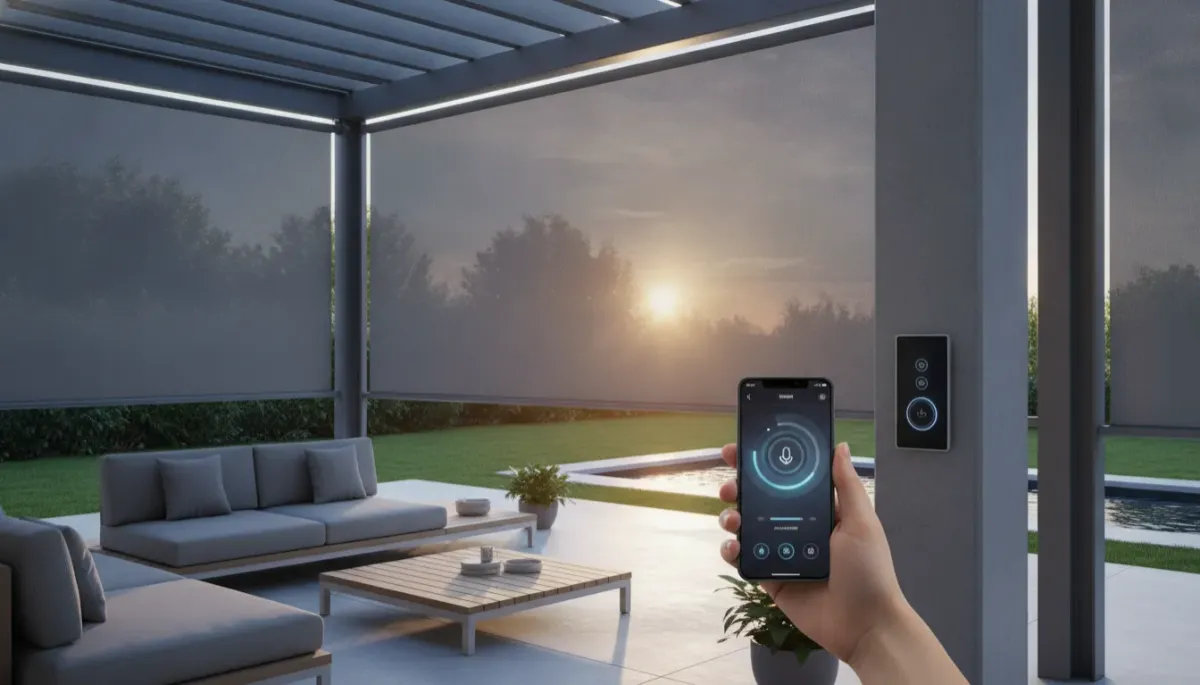
Smart Motorized Patio Shades With App and Voice Control 101
Hot afternoons can make even a beautiful patio difficult to enjoy. Glare reaches the television, furniture becomes uncomfortable, and nearby homes may feel a little too close. Smart motorized patio shades with app and voice control offer a practical way to adjust the space without interrupting your plans. Lower the shades before the afternoon sun arrives, close them when guests come over, or open them again when you want a clear view. You can also connect the shades with outdoor lighting, audio, and video for simple scenes and routines. Before choosing a system, consider fabric openness, power, wind protection, mounting, smart-home compatibility, and professional installation.
Key Takeaways
Match the shade to your patio: Evaluate sun exposure, fabric openness, privacy goals, wind conditions, weather, and opening size before selecting a system.
Verify smart-home compatibility: Confirm app, voice assistant, hub, scheduling, local remote, manual operation, and backup control options before ordering.
Compare the full project cost: Review power, hardware, installation, programming, warranty, service, and financing so you can choose a dependable solution with clear long-term value.
What Are Smart Motorized Patio Shades With App and Voice Control?
Smart motorized patio shades are exterior roller shades operated by an electric motor and connected to a control system. Instead of walking outside to adjust each shade, you can raise or lower one shade, a group of shades, or an entire patio from a phone, remote, wall switch, or voice assistant.
For homeowners in Los Angeles, the Temecula Valley, and the Dallas Metroplex, this setup can make outdoor areas more comfortable during bright, hot afternoons and easier to use after sunset. Depending on the fabric and installation, patio shades can reduce glare, add privacy, and help limit solar heat in a covered outdoor space.
Outdoor Lights + Shades combines custom shade design, professional installation, and smart control to create a system that fits your patio. You can view examples of completed outdoor living projects in the company’s project gallery.
A smart shade system usually includes four main parts: a motor, a roller tube, outdoor fabric, and a bottom bar. It may also include a hub or bridge that connects the shades to your home network and smart-home platform. Before choosing a system, confirm how it receives power, which controls it supports, whether it works with your preferred voice assistant, and how you can operate it if the internet or electricity is unavailable.
How Tubular Motors, Roller Tubes, and Bottom Bars Work
A tubular motor sits inside the roller tube at the top of the shade. When the motor turns, it rotates the tube and rolls the fabric up or down. Limit settings tell the motor where to stop, allowing the shade to open fully, close completely, or stop at a preferred position.
Many systems use rechargeable battery motors, while others connect to low-voltage wiring or standard electrical service. Battery-powered options can simplify installation where running wire would require changes to walls or a patio cover. You still need a convenient way to reach the motor or charging connection, so ask about battery access before installation.
The bottom bar adds weight to the fabric and helps it hang evenly. It can also reduce movement in light breezes and give the shade a cleaner finished appearance. On wider or more exposed openings, side channels, retention systems, or other wind-management features may help keep the fabric in place. A professional installer can assess the opening and recommend suitable hardware. Sun Glow’s guide to smart shades explains how these components work together.
Control Shades With Apps, Voice Commands, Remotes, Switches, or Manually
The best control method depends on how you use your patio. A smartphone app lets you operate shades from inside the home, adjust them while you are away, and control multiple patio areas together. Depending on the system, the app may also let you group shades, save preferred positions, check shade status, and create automated actions.
Voice commands are helpful when your hands are full while preparing an outdoor meal or when you want to adjust the patio without searching for a remote. If the system is compatible with your voice assistant, you might say, “Close the west patio shades,” or create a routine that lowers the shades and turns on outdoor lighting at the same time. Use short, distinct shade names to reduce confusion.
Remotes and wireless wall switches provide quick local control without opening an app. Manual operation is also important to discuss before installation. Some systems can be adjusted by hand, while others depend on a backup control or accessible battery. SmartWave’s motorized outdoor shade information describes several control options for exterior shades.
Set Schedules, Scenes, Timers, and Sensor Triggers
Schedules allow your shades to follow a predictable routine. You might raise them in the morning, lower them before strong afternoon sunlight reaches the patio, and open them again when you are ready to spend time outside. Scheduling reduces daily adjustments, but your settings should account for seasonal changes and your household’s routines.
Scenes combine several actions under one command. An “Outdoor Dinner” scene could lower west-facing shades, turn on landscape lights, and start an outdoor audio system. A “Movie Night” scene might close every shade and dim nearby lights. These combinations are especially useful when your patio includes several shade zones or other connected equipment.
Timers manage one-time or repeating delays, while sensors can respond to conditions such as sunlight, temperature, or wind. Wind protection deserves special attention. A system may raise shades automatically when conditions become unsafe, but sensor placement and settings affect how that feature works. Ask whether the sensor is included, where it will be installed, and what happens if it loses power or connectivity. Graywind’s outdoor shade controls provide one example of scheduling and automated shade features.
Connect Through Wi-Fi, Bluetooth, Hubs, Bridges, Zigbee, or Z-Wave
Smart shades can use several connection methods, and each one affects setup and reliability. Wi-Fi shades connect directly to your home network, which can simplify installation, but they depend on reliable coverage near the patio. Bluetooth typically works over a shorter distance and may be used for local setup or direct control from a nearby phone.
A hub or bridge connects the shade motors to your home network or smart-home platform. Some systems use a proprietary hub, while others support protocols such as Zigbee or Z-Wave. These protocols can help connected devices communicate through a compatible hub, but they may require additional equipment and configuration.
Before ordering, check whether the system works with Amazon Alexa, Google Home, Apple Home, or the platform you already use. Confirm whether voice control requires a separate bridge, subscription, or compatible controller. You should also ask what remains available during an internet outage. A local remote or wall switch can preserve basic shade control when app access is temporarily interrupted. SmartWings’ outdoor shade specifications show how connectivity and smart-home compatibility can vary between systems.
Why Choose Smart Motorized Patio Shades?
A covered patio can add valuable living space, but direct sunlight, glare, heat, and limited privacy may keep you from using it as often as you would like. Smart motorized patio shades give you more control over those conditions, allowing you to adjust the space without walking around to lower each shade by hand.
With app, remote, wall-switch, and voice control, you can manage one shade or several at once. Schedules and scenes can also help you prepare the patio for afternoon sun, outdoor dining, or evening entertaining. The fabric, openness level, mounting style, and shade coverage all affect performance, so a professional design is important.
Outdoor Lights + Shades creates custom outdoor-living solutions for homeowners in Los Angeles, the Temecula Valley, and the Dallas Metroplex. A properly planned system can complement your home’s architecture while helping the patio feel more comfortable, private, and functional.
Reduce Patio Heat and Improve Comfort
Motorized outdoor shades can reduce the direct sunlight reaching a patio, deck, outdoor furniture, and nearby doors or windows. By limiting solar exposure, they may help reduce heat buildup and make a covered outdoor area more comfortable during sunny afternoons. Outdoor shade information from Graywind also identifies heat, glare, and UV control as key benefits of exterior shades.
Your results will depend on several factors, including fabric color, openness, shade position, patio orientation, airflow, and the surrounding surfaces. A west-facing patio may need more afternoon coverage than a north-facing space. A professional designer can identify the openings that receive the most sunlight and recommend when and where shades will have the greatest effect.
Block UV Rays and Glare Without Losing Views
The right screen fabric can reduce harsh sunlight while preserving views of your yard, pool, landscaping, or neighborhood. Fabric openness describes how much light and visibility can pass through the material. Lower openness typically offers stronger glare and privacy control, while higher openness allows more daylight and visibility.
A 5% openness fabric is often used as a balance between outdoor views, sunlight control, and privacy. However, the best option depends on the patio’s direction, nearby homes, furniture placement, and the amount of natural light you want to maintain. Reviewing motorized outdoor shade specifications can help explain how openness affects performance, but a local assessment is more useful for selecting fabric for your specific patio.
Add Privacy Without Enclosing the Patio
Motorized shades can provide privacy without turning an open patio into a permanent room. Lower them when nearby homes are visible, neighbors are outside, or you want a more secluded setting for dinner. Raise them when you prefer an unobstructed connection to the yard or surrounding landscape.
This flexibility is especially helpful for wide openings and hard-to-reach shades. Instead of moving from one side of the patio to the other, you can use a remote, app, wall switch, or voice command. Exterior shades can also preserve the option to open the space completely when privacy is not needed. See how Outdoor Lights + Shades approaches custom outdoor solutions for patios and other outdoor living areas.
Make Outdoor Dining and Entertainment More Comfortable
Patio shades can make outdoor meals, conversations, and movie nights more pleasant by reducing glare and helping manage sunlight. Lowering a shade before guests arrive can also create a more comfortable, finished setting for an outdoor dining area, lounge, or entertainment zone.
Fabric selection matters when you plan to use the patio for television viewing. A light-filtering screen can soften daylight, while a darker fabric may provide better glare control. Consider how the sun moves across the space and where it reaches an outdoor display. Pairing shades with a professionally planned outdoor audio and video system can help create a more enjoyable entertainment area without adding permanent walls.
Control Multiple Shades Quietly and Easily
Smart controls are particularly helpful when a patio has several openings. You might lower west-facing shades in the afternoon, close the dining-area shades during a meal, or raise every shade at the end of the evening. Group controls let you make these changes together instead of operating each shade separately.
Depending on the system, you may use a handheld remote, mobile app, wall switch, or voice assistant. Some systems also support schedules and scenes for repeatable settings. During the design process, ask about motor noise, shade size, motor placement, control range, and response time. These details can make a noticeable difference in how convenient the system feels during everyday use.
Set Realistic Expectations for Up to 90% Less Heat Gain
Some outdoor shade products advertise up to 90% less heat gain. Consider that figure a potential maximum under specific testing conditions, not a guaranteed result for every patio. Actual performance depends on fabric openness, color, shade coverage, patio orientation, wind, ventilation, nearby windows, and whether the shade is lowered during the strongest sunlight.
Exterior shades can reduce solar exposure and help limit heat reaching a covered patio or adjacent glass, but they do not replace air conditioning. Ask for product-specific performance information and discuss the patio’s sun patterns during the design appointment. Outdoor Lights + Shades can help match the shade design to your comfort goals, home, and installation conditions. Customer financing options may also be available for a larger outdoor-living project.
Compare Smart Motorized Patio Shade Brands and Systems
Comparing smart motorized patio shades takes more than checking the price or choosing the system with the most impressive app. The best option should match your patio’s size, sun exposure, weather conditions, mounting surface, and smart-home setup. A shade designed for a sheltered balcony may not provide the same performance on a wide pergola exposed to wind and afternoon heat.
Start by comparing the complete system. Review the fabric, roller tube, motor, power source, controls, mounting hardware, side channels, bottom bar, warranty, installation, and service. Also confirm how the shade integrates with the other features you want outdoors, such as landscape lighting, audio, or video.
Outdoor Lights + Shades takes an end-to-end approach, combining custom design, professional installation, smart control, and outdoor-living solutions. Homeowners can view the company’s outdoor project gallery to see how these elements can work together in one cohesive space.
See How Outdoor Lights + Shades Combine Design, Installation, and Smart Control
A motorized patio shade should complement your home rather than look like an afterthought. During the design process, consider the shade box, fabric color, bottom bar, side channels, mounting position, and nearby lighting. Each detail affects the appearance and day-to-day performance of the installation.
Outdoor Lights + Shades can plan shades alongside landscape lighting, outdoor audio, and video systems. This coordinated approach helps create a more comfortable and functional patio instead of a collection of disconnected upgrades. SmartWave shades are compatible with Apple Home, Amazon Alexa, Google Home, and SmartThings, according to the manufacturer’s smart shade product information.
Compare DIY, Semi-Custom, and Professional Installation
DIY shades can appeal to homeowners who want a lower initial cost or a quick project. Some no-drill systems attach with brackets or adhesive mounting, which may suit renters or temporary installations. However, these products may offer fewer options for large openings, uneven surfaces, wind exposure, and permanent outdoor use. A no-drill shade system is not automatically suitable for every patio.
Semi-custom systems provide more choices for fabric, dimensions, and controls, but you may still handle measuring, mounting, wiring, and troubleshooting. Professional installation is usually the better option for wide spans, stucco, masonry, pergolas, or multiple shades. An experienced installer can check clearances, locate structural support, account for uneven surfaces, and make sure each shade operates smoothly.
Compare Motor Quality, App Features, Voice Control, and Speed
Most smart patio shades use quiet tubular motors inside the roller tube. Compare lifting capacity, operating noise, speed, expected usage, and power source. Battery-powered motors can simplify installation, while hardwired systems may suit large shades or openings used several times each day. Some models use rechargeable battery tubes with USB charging, as this overview of smart shade motors explains.
The app should offer more than simple up and down commands. Look for individual and group controls, shade-position settings, schedules, timers, status updates, and remote access. Confirm whether voice commands work directly with your preferred platform or require a hub or bridge. It is also worth checking how quickly the shade responds and whether a remote, wall switch, or manual control remains available during internet or power interruptions.
Evaluate Custom Sizing, Fabrics, Side Channels, and Bottom Bars
Accurate measurements are essential because outdoor shades are often made to order. Confirm the opening’s width, height, and depth, along with whether the listed dimensions refer to the fabric, roller, or complete unit. Uneven walls may require shims or different brackets. You should also verify which side houses the motor so it does not interfere with doors, posts, lights, or other fixtures.
Fabric openness affects sunlight, views, privacy, and glare. Common choices include 1%, 3%, and 5% openness, with lower percentages generally allowing less light and visibility through the fabric. Custom outdoor shade systems may offer several colors and configurations for patios, decks, porches, and pergolas.
Side channels can guide the fabric and reduce gaps, while a weighted bottom bar helps the shade hang neatly. These features may improve privacy and light control, but they can also add cost and installation requirements. Ask which components suit your opening and local weather conditions.
Compare Features, Pricing, Warranties, and Trade-Offs
Compare the complete installed price, not only the advertised cost of the shade. The final amount may include the motor, fabric, opening size, side channels, control equipment, wiring, mounting hardware, delivery, and labor. Published estimates for motorized shades often range from several hundred dollars to more than $1,000 per window installed, while large custom patio systems vary based on their size and construction.
Review warranty coverage for the fabric, motor, electronics, brackets, and installation labor. Also ask who handles service calls and whether replacement parts remain available. A lower-cost system may offer useful features but limited support. A premium installation may cost more because it includes custom measurements, professional fitting, smart-home integration, and service.
Request a written proposal that separates products, labor, controls, electrical work, and optional features. When comparing a complete outdoor project, review Outdoor Lights + Shades’ customer financing options alongside the total project cost.
Use Reviews to Evaluate Installation, Service, and Support
Reviews can reveal details that product specifications leave out. Look for comments about packaging, motor noise, app reliability, measurement instructions, installation, and customer service. Reviews from homeowners with similar patios, pergolas, or outdoor openings are more useful than general comments about indoor shades.
Focus on patterns rather than one unusually positive or negative experience. Repeated praise for helpful support may point to a reliable service process. Several reports of delayed parts, difficult setup, or inconsistent app performance deserve closer attention. For custom systems, ask who manages warranty claims, replacement motors, fabric repairs, and control problems after installation.
Local support can also simplify future service. Outdoor Lights + Shades serves homeowners in Los Angeles, the Temecula Valley, and the Dallas Metroplex. Its FAQ page answers common questions and can help you prepare for a consultation about design, installation, and smart controls.
Consider Local Availability and Customer Financing
Local availability matters when your project requires precise measurements, professional mounting, electrical coordination, or repairs. An online brand may ship a shade to your home, but you may still need to solve mounting problems or find help if the motor or controls fail. Local experience is particularly helpful for stucco, masonry, large patio openings, and weather-exposed installations.
Ask whether the company serves your area, provides an in-home consultation, and can source replacement parts. Confirm the expected timeline for design, fabrication, delivery, and installation. You should also ask what happens if the opening changes during construction or a component needs service.
Financing may make it easier to plan shades alongside lighting or audio/video improvements. Compare the total financed cost, payment schedule, interest rate, and promotional terms before signing. Homeowners can review customer financing information from Outdoor Lights + Shades when considering a larger outdoor-living project.
How Do Smart Patio Shades Fit Your Smart Home?
Smart motorized patio shades can connect your outdoor living area to the same system that manages indoor lights, thermostats, security cameras, and entertainment. This makes the patio feel like a natural extension of your home instead of a separate space with controls you rarely use.
You might open the shades in the morning, lower them during the hottest part of the afternoon, and close them before an outdoor movie begins. You can also coordinate them with landscape lighting, patio audio, and outdoor video. For example, an evening entertainment scene could close the shades, turn on pathway lights, and start your patio speakers with one command.
The best setup depends on more than whether a shade includes a smartphone app. Check which motor and control systems it support, whether you need a hub or bridge, and which features remain available during an internet or power outage. You should also consider the patio’s distance from your router, the materials around the installation area, and how you want to use the shades day to day.
A professional design consultation from Outdoor Lights + Shades can help you match the shade system with your existing smart-home equipment, patio layout, outdoor lighting, and audio/video plans.
Connect With Amazon Alexa, Google Home, Google Assistant, Apple Home, or Siri
Many smart patio shades work with popular voice assistants, but compatibility can vary by motor, hub, app, and region. Depending on the system, you may be able to connect your shades with Amazon Alexa, Google Home, Google Assistant, Apple Home, Siri, Samsung SmartThings, or another platform. SmartWave lists compatibility with Apple Home, Amazon Alexa, Google Home, and SmartThings.
Voice control helps when your hands are full, guests are arriving, or you want to adjust several shades at once. Before ordering, confirm the exact commands supported. Some systems handle open and close commands, while others let you set a position, such as opening the shades to 50%.
Compare Native Compatibility and Third-Party Adapters
Native compatibility means the shade motor connects directly with your preferred smart-home platform through an official app or integration. This often creates a simpler setup and may provide better access to features such as shade position, schedules, scenes, and group controls. Ask whether the connection is officially supported by the motor manufacturer, rather than assuming any third-party app will provide the same experience.
An adapter or separate hub may still be a practical choice when a shade does not connect directly to your system. However, each additional device can add cost, setup steps, and another potential point of failure. Depending on the motor, Graywind outdoor shades may require a separately purchased hub. Request a complete compatibility list that names the motor, hub, app, and voice assistant connection before installation.
Check Hub, Bridge, Wi-Fi, Zigbee, and Z-Wave Requirements
The communication method affects how your shades connect to the rest of your home. Wi-Fi models may connect directly to your router, while Bluetooth models often rely on your phone or a nearby bridge for remote access. Other systems use a dedicated hub to connect the motor with your smart-home platform.
Zigbee and Z-Wave motors can suit larger connected-home systems because they use low-power mesh networks. SmartWings says its Zigbee and Z-Wave motors work with systems such as Samsung SmartThings, Home Assistant, and Hubitat. Confirm whether the hub is included, where it should be installed, and how many motors it supports.
Outdoor signal strength deserves attention. Patio distance, thick walls, stucco, masonry, and metal structures can affect communication between the shades, hub, and router. Include the complete outdoor layout when planning the system.
Review App Features, Including Remote Access, Status, Schedules, and Scenes
A shade app should provide more than a basic open or close command. Look for remote access, individual and group controls, shade-position status, schedules, timers, scenes, and notifications. Position feedback lets you check whether the shades are open or closed before you start an outdoor gathering or leave home.
Some systems let you control the shades through a smartphone app, voice commands, a handheld remote, and a wireless wall switch. SmartWave describes these control options for its motorized outdoor shades. Also check whether the app supports separate shade groups. You may want west-facing shades to close in the afternoon while north-facing shades stay open for the view. A clear app layout makes those adjustments easier.
Create Voice Commands, Routines, Geofencing, and Multi-Device Automations
Routines can coordinate your shades with other smart-home devices. An “outdoor dinner” routine could lower the shades, turn on landscape lighting, and start patio speakers at a comfortable volume. A “movie night” scene could close the shades, dim nearby lights, and activate the outdoor display. These automations reduce the number of separate commands you need to remember.
Schedules can also respond to the way sunlight changes throughout the day. You might lower the shades during peak afternoon sun and reopen them in the evening. Some systems support opening and closing times or preset shade positions, as Graywind explains for its outdoor shades. Geofencing may close the shades when you leave home, but confirm that the feature works with your platform and that every household member understands how it operates.
Plan for Internet Outages, Power Failures, Privacy, and Manual Operation
Smart control should add convenience without leaving you unable to operate the shades. Ask what remains available if the internet connection fails. Some systems continue to respond through a local remote, wall switch, Bluetooth connection, or stored schedule. Others may lose app access until the connection returns. Manual control can be especially helpful for a patio exposed to strong afternoon sun or changing weather.
Power planning matters as well. Battery-powered motors need accessible charging or replacement batteries, while hardwired systems require suitable electrical access. Solar charging may work well in open areas, but a covered patio or heavily shaded location can limit performance. Ask how the system behaves when a battery is low and whether the motor can be operated manually.
Protect your account with a strong, unique password, and review app permissions before connecting the shades to other devices. During your consultation, ask Outdoor Lights + Shades about manual controls, battery access, local installation conditions, privacy settings, and post-installation support.
Compare Shade Fabrics and Weather Features
The fabric you choose affects much more than the appearance of your patio shades. It influences how much sunlight enters the space, how clearly you can see outdoors, how much privacy you receive, and how the shades perform in heat, wind, and moisture. A fabric that works well for a covered patio in Los Angeles may not be the right choice for an exposed outdoor area in the Dallas Metroplex.
Start by identifying how you use the space. If you plan to watch television outdoors during the afternoon, glare control may matter most. If your patio faces a neighbor’s yard, privacy may take priority. For an open dining area, you may prefer a fabric that filters sunlight without making the space feel enclosed. A consultation with Outdoor Lights + Shades can help you compare these factors before choosing a fabric or motorized system.
Ask about the fabric’s openness factor, construction, color, UV performance, cleaning requirements, and weather rating. Also confirm whether the shade can remain down in light wind or must be raised when conditions change. These details affect comfort, appearance, service life, and safe operation.
Your local climate and the patio’s orientation matter, too. A west-facing opening may need stronger glare control than a shaded north-facing space. Likewise, a patio exposed to coastal moisture, desert heat, or seasonal storms may require different materials and hardware. Comparing the complete shade system, rather than the fabric alone, will help you make a more practical choice.
Compare 1%, 3%, 5%, and Other Fabric Openness Options
The openness factor describes how much of the fabric consists of tiny openings. A 1% fabric has smaller openings, so it generally provides stronger glare control, greater daytime privacy, and less visibility through the shade. It can work well on patios that receive intense afternoon sun or face a busy street.
A 3% fabric offers a middle ground. It filters sunlight and helps reduce glare while preserving more of the outdoor view. Many homeowners choose this option for patios used for dining, conversation, and entertainment.
A 5% fabric has a more open weave, allowing more light and visibility to pass through. It can create a brighter, more connected feeling, but it usually provides less privacy and glare reduction than tighter weaves. More open fabrics may also feel less effective when the sun sits low on the horizon.
Openness is only one part of the decision. Fabric color, weave, window placement, and lighting conditions also affect performance. Review samples in the actual installation area before ordering, and use the company’s gallery to compare completed outdoor spaces.
Balance Sunlight, Privacy, Views, Glare, and UV Protection
A patio shade does not need to block every ray of sunlight to make the space more comfortable. Solar screen fabrics filter light and solar energy while preserving some visibility. Darker fabrics often provide a clearer outward view and reduce reflected glare, while lighter fabrics may reflect more solar energy and create a brighter appearance.
Privacy changes with lighting conditions. During the day, a screen can make it harder for people outside to see into the patio. At night, interior or patio lights can reverse that effect, making the space more visible from outdoors. If nighttime privacy matters, ask whether side channels, layered shades, curtains, landscaping, or another privacy solution would be appropriate.
UV protection is another consideration. The Skin Cancer Foundation explains the role of shade as part of a broader sun-protection plan. Outdoor shades can also help protect furniture, flooring, and finishes from direct exposure, but performance varies by fabric and installation. Ask for published UV-blocking information rather than relying on general claims.
Set Realistic Expectations for Shade, Privacy, and Blackout Performance
Outdoor screen shades are designed to filter sunlight, reduce glare, and make a patio more comfortable. They are not always intended to create a completely dark room or provide the same privacy as a solid interior blind. Even a tightly woven outdoor fabric may allow light around the edges, beneath the bottom bar, or through small gaps in the mounting design.
Blackout performance depends on more than the fabric. Side channels, overlapping panels, cassette design, mounting position, and installation accuracy all affect how much light enters. If you plan to use the patio as an outdoor theater, ask whether the proposed system is suitable for daytime viewing and whether additional lighting control will be needed.
Privacy also depends on the direction of light. A shade may provide strong daytime privacy but limited privacy after dark when the patio is illuminated. Ask to see fabric samples from both sides in daylight and at night. A clear explanation of these limits can help you choose a system that matches your expectations instead of assuming every outdoor shade provides full blackout protection.
Compare PVC-Coated Polyester, Acrylic, Mesh, and Other Outdoor Fabrics
Outdoor fabrics use different fibers and coatings to handle sunlight, moisture, and repeated movement. PVC-coated polyester is commonly used for screen shades because it combines strength, dimensional stability, and resistance to outdoor exposure. It is available in different openness levels and can work well when glare control and durability are priorities.
Acrylic fabrics are valued for color retention and UV resistance. Many are solution-dyed, meaning color is integrated into the fiber rather than applied only to the surface. This construction can help the fabric maintain its appearance after extended sun exposure. The U.S. Department of Energy’s guidance on window coverings also recognizes exterior shading as a way to manage solar heat through glazed areas.
Mesh fabrics preserve airflow and some connection to the surrounding view, but performance varies by weave, coating, and openness. Ask whether the material is intended for exterior use and tested for your area’s conditions. Do not compare fabrics by material name alone. Review the complete specification, including UV performance, openness, warranty, cleaning instructions, and wind limitations.
Check Color, Fade Resistance, Mildew Protection, and Cleaning Needs
Fabric color affects both appearance and solar performance. Darker screens can reduce visual glare and often make it easier to see through the shade from inside. Lighter colors may reflect more sunlight and create a softer, brighter look. Your installer can explain how the selected color may perform on a west-facing patio or another highly exposed elevation.
Ask whether the fabric is solution-dyed, treated for mildew resistance, and tested for colorfastness. No outdoor textile is completely immune to fading, especially in areas with strong sun. Proper cleaning also matters. Many screen fabrics can be cleaned with a soft brush, mild soap, and water, but abrasive tools and harsh chemicals may damage coatings or finishes.
Keep nearby landscaping trimmed so branches, leaves, and irrigation spray do not repeatedly contact the fabric. Allow shades to dry when practical before rolling them up, and follow the manufacturer’s care instructions. For material-specific guidance, review the fabric manufacturer’s maintenance information, such as Sunbrella’s outdoor fabric care recommendations.
Ask About Water Resistance, Wind Ratings, and Operating Limits
Water resistance and waterproofing are not the same. A water-resistant screen may shed light rain while still allowing moisture to pass through its weave. A waterproof fabric can provide more protection, but it may also reduce airflow and visibility. Ask what the selected fabric is designed to do, especially if the patio is exposed to seasonal storms.
Wind performance depends on the entire shade assembly, not just the fabric. Shade width and height, mounting surfaces, side retention, bottom bar, roller tube, and surrounding structure all affect stability. A shade rated for one size or configuration may have a different limit when installed at a larger width.
Ask for the manufacturer’s operating instructions and wind limits in writing. Some systems include sensors that raise the shade when wind reaches a set threshold, but sensors do not replace good judgment during severe weather. The National Weather Service provides guidance on wind hazards, while your installer should explain when shades should be retracted, secured, or left unused.
Evaluate Wind Retention, Corrosion Resistance, Motor Noise, and Safety
Wind retention helps keep the fabric aligned as it moves, especially across wide openings or exposed patios. Side channels, guide cables, zip systems, and weighted bottom bars can improve stability, but each option has design and operating limits. Ask how the proposed system handles gusts, fabric tension, and contact with nearby posts or walls.
Metal components also need protection from outdoor exposure. Powder-coated or anodized aluminum can help resist corrosion, but the quality of the finish, fasteners, brackets, and installation environment still matters. In coastal parts of Southern California, salt air deserves special attention. In humid areas, ask how the system handles moisture and mildew around the housing and tracks.
Motor noise, pinch points, emergency operation, and manual controls should be part of the conversation. A quiet motor is especially useful near bedrooms, dining areas, and outdoor entertainment spaces. Confirm what happens during a power or internet outage, whether the shade can be operated manually, and how sensors help prevent unsafe movement. Outdoor Lights + Shades can coordinate automated patio shades with outdoor lighting and audio/video systems, helping you plan one comfortable, cohesive space.
What Power and Installation Requirements Should You Expect?
Smart motorized patio shades need more planning than indoor window coverings. Outdoor heat, wind, moisture, shade size, mounting surfaces, and power access all affect the right system. Before choosing a fabric or app, confirm that the shade can receive dependable power, attach securely, and operate with enough clearance around the roller tube and bottom bar.
A professional site assessment is often the best starting point. An installer can inspect the patio structure, identify a clean power route, verify measurements, and recommend the most suitable mounting method. This is especially helpful for wide openings, covered patios, stucco walls, masonry, pergolas, and motorized shades that will be used frequently. Outdoor Lights + Shades provides custom outdoor-living solutions for homeowners in Los Angeles, the Temecula Valley, and the Dallas Metroplex, combining design, installation, and smart control.
Compare Rechargeable Batteries, Hardwiring, Solar Charging, and Low Voltage
Motorized patio shades typically use rechargeable batteries, hardwired electricity, solar charging, or low-voltage power. Rechargeable battery motors can simplify installation when running new electrical lines would be difficult. Many systems use a rechargeable battery tube or charging cable, allowing the shade to operate without a visible cord during normal use. Smart shade systems commonly offer either hardwired or battery-powered motors.
Hardwired shades provide consistent power and may suit large shades, frequently used openings, or new construction. Low-voltage systems can make wiring more manageable, but they still need a suitable transformer and protected cable route. Solar charging may work well in an exposed, sunny location, but it can be less dependable beneath a patio cover. Compare the shade’s size, daily use, sun exposure, and access to power before choosing a system.
Plan Battery Access, Charging, and Nonreplaceable Battery Needs
Battery power is convenient, but it still requires a maintenance plan. Ask where the charging port or battery tube is located, how often charging is expected, and whether the shade must be removed to reach it. A shade mounted above a door or high on a patio structure may require a ladder or service visit whenever it needs attention.
Also confirm whether the battery can be replaced separately from the motor. Some systems use built-in batteries that are not designed for independent replacement. One outdoor shade system states that its built-in battery cannot be replaced separately, while a full charge typically lasts four to six months depending on use and other conditions. Review the manufacturer’s specifications and warranty before choosing battery power for a large or hard-to-reach shade.
Understand Solar Limits Under Patio Covers and in Shaded Areas
Solar charging can reduce the need for electrical wiring, but the panel needs consistent sunlight. A patio roof, deep overhang, nearby trees, or a north-facing wall may limit the energy available for charging. Seasonal changes can also affect performance, especially if the shade opens and closes several times a day.
Ask whether the solar panel can be mounted separately from the shade and whether the manufacturer lists a recommended exposure range. For a covered patio, rechargeable batteries or low-voltage wiring may offer more dependable performance. You should also discuss wind protection. Outdoor shade guidance often recommends side tracks or cable guides to help keep fabric in position during breezy conditions. Solar power addresses one installation concern, but it does not replace careful weather planning.
Choose Inside-, Outside-, Ceiling-, or Post-Mount Installation
The mounting position affects coverage, appearance, clearance, and installation difficulty. An inside mount places the shade within a recessed opening for a clean, built-in look. An outside mount attaches to the face of a wall or beam and can cover the opening more completely. Ceiling mounting works beneath a patio cover when the structure can support the brackets. Post mounting may suit a freestanding pergola or outdoor enclosure.
Each option has trade-offs. Inside mounting may leave small gaps at the sides, while outside mounting needs enough room above and beside the opening for the roller tube and brackets. Ceiling and post mounts require careful alignment so the shade rolls evenly. A flat, stable surface is preferred, and shims may be needed when the mounting surface is uneven.
Confirm Width, Height, Clearance, and Motor-Side Placement
Accurate measurements determine whether the shade covers the opening properly and operates without rubbing against trim, lights, fans, or furniture. Measure width and height at more than one point, since outdoor openings are not always perfectly square. The installer should also check the space above the opening for the roller tube, brackets, and motor housing.
Motor placement matters, too. Depending on the product, the motor may sit on the left or right side and require additional clearance. Confirm the location of the charging port, solar panel, wiring, and control components before placing the order. Manufacturer guides can explain the basic process, but a professional verification remains valuable for custom installations. Outdoor shade measurement guidance can help you understand which dimensions the manufacturer needs.
Prepare Flat Surfaces, Shims, Brackets, and Structural Support
A motorized shade places more demand on its mounting points than a lightweight manual shade. Brackets must support the roller tube, motor, fabric, and bottom bar while tolerating repeated movement and outdoor exposure. The mounting surface should be flat enough for the brackets to align correctly. If it is uneven, the installer may use shims to create a stable, level fit.
Do not assume that a surface can support the shade simply because it looks solid. The installer may need to locate framing, add blocking, or use specialized anchors. A patio cover with a thin decorative finish may not provide enough structure by itself. Clear furniture and décor from the work area so the team can inspect the surface and maintain a straight mounting line. Proper support helps the shade roll evenly and reduces stress on the motor.
Account for Stucco, Masonry, Wood, and Patio-Cover Attachments
The exterior finish affects both the fasteners and installation method. Stucco requires care around the weather barrier, while masonry needs suitable anchors and accurate drilling. Wood framing can provide a strong attachment point, but the installer should confirm its condition, thickness, and position. An aluminum or lightweight patio cover may need reinforcement before it can carry a motorized shade.
Ask how the installation team will seal penetrations and protect the structure from moisture. Corrosion-resistant hardware may be important in areas exposed to irrigation, coastal air, or frequent rain. Outdoor shade materials also need to balance strength, UV resistance, and protection against mold and corrosion. Wind-resistant shade guidance can help you ask informed questions about fabric, hardware, and retention systems.
Plan for Wind, Electrical Work, Permits, and Local Codes
Wind is one of the most important considerations for an outdoor shade. A loose bottom bar can swing, fabric can billow, and repeated movement can place stress on the brackets and motor. Depending on the design, side channels, guide cables, or a wind sensor may help manage movement. Ask when the shade should be raised and whether the system can respond automatically when wind conditions change.
Hardwired and low-voltage systems may require electrical work beyond the shade installation. Confirm whether wiring will be concealed, how outlets or transformers will be protected, and whether a licensed electrician is required. Permit and code requirements vary by location and project scope. Rules in Los Angeles, the Temecula Valley, and the Dallas Metroplex may differ, so confirm requirements before work begins. A professional team can identify these details early and coordinate the appropriate trades.
Compare DIY, No-Drill, and Professional Installation
Some motorized shades are designed for DIY installation, while others require precise measurements, structural support, electrical connections, or programming. A no-drill product may suit a temporary setup, but many patio shades need permanent attachment to withstand sun, wind, and repeated operation. Tool-free systems can be practical in limited situations, yet they may not offer the coverage, wind retention, or custom fit required for a larger patio.
Professional installation is particularly useful when the opening is wide, the mounting surface is uneven, or power must be added. An installer can verify dimensions, secure brackets to the right structure, set motor limits, connect the app, and explain manual operation. Before hiring a provider, ask what the installation includes and whether service is available afterward. Outdoor Lights + Shades also offers customer financing, which can help you plan a professionally designed and installed shade system around your budget.
Smart Motorized Patio Shade Pricing, Promotions, and Value
Smart motorized patio shades can range from a simple DIY purchase to a fully custom outdoor-living project. The final price depends on more than the shade itself. Fabric, size, motor type, control options, power source, mounting conditions, installation, and the number of shades all influence the quote.
Ready-made smart shades may cost around $200 to $400 per window when they are smaller and designed for DIY installation. Custom motorized shades with premium fabrics, hardwiring, smart-home integration, specialty hardware, or larger openings can reach $1,500 to $2,500 or more per window, according to this motorized shade pricing guide. Outdoor patio shades often require additional planning because they must handle sunlight, wind, moisture, and larger openings than typical interior window treatments.
When comparing estimates, look beyond the price of the shade. Ask what each quote includes, such as measurement, mounting hardware, power, controls, installation, programming, warranty coverage, and future service. A detailed proposal makes it easier to compare similar systems and choose an option that fits your patio, home, and budget.
Compare DIY, Semi-Custom, and Custom Installed Shade Costs
DIY shades are usually the least expensive option, especially for standard-size openings with accessible mounting surfaces. They can work well for a smaller project, but you will handle measuring, mounting, motor pairing, troubleshooting, and future adjustments. A measurement mistake or unsuitable surface can quickly reduce the expected savings.
Semi-custom shades offer more fabric and sizing choices while keeping installation fairly straightforward. They may include rechargeable motors, remotes, or app connectivity, but you may still need to prepare the area and install the system yourself.
Custom-installed shades cost more because the design accounts for each opening, mounting condition, fabric choice, wiring, side channels, and control preference. Professional installation also helps ensure that the shades operate evenly and remain secure in outdoor conditions. For multiple shades or integrated smart-home controls, a custom system can provide a cleaner result than combining separate products.
See How Size, Fabric, Openness, Motors, Controls, and Power Affect Price
Shade size is one of the clearest cost factors. Wider and taller shades require more fabric, larger roller tubes, stronger brackets, and motors capable of handling additional weight. Large openings may also need center supports or side tracks to keep the fabric stable.
Fabric choice affects appearance, comfort, and durability. A basic mesh fabric may cost less than a premium option designed for stronger UV protection, improved privacy, or greater fade resistance. Openness matters too. A more open weave can preserve views and airflow, while a tighter weave may provide better glare control and daytime privacy.
Motor and control choices add another layer. Basic remote operation generally costs less than app control, voice commands, schedules, sensors, and whole-home integration. Power also affects the estimate. Rechargeable batteries can simplify installation, while hardwired or low-voltage systems may require electrical work. A typical motorized shade may cost $300 to $1,000 per window, depending on these features, according to this motorized shade cost guide.
Account for Side Tracks, Hubs, Bridges, Wiring, Mounting, and Delivery
The fabric and motor are only part of the system. Side tracks or guide channels can hold fabric in place, reduce light gaps, and improve performance in breezy areas. They also add materials and installation time. Bottom bars, upgraded brackets, specialty hardware, and recessed installation can affect the total price as well.
Smart controls may require a hub or bridge, especially when the motor does not connect directly to your home Wi-Fi. If you want multiple shades to operate together, the installer may need to configure groups, scenes, schedules, or voice commands. Confirm whether these devices are included or priced separately.
Wiring can also change the project scope. Running power through a patio cover, stucco wall, masonry surface, or finished ceiling may require additional labor. Delivery charges, difficult access, lift equipment, and extended travel can add to the estimate. This outdoor motorized shade pricing overview explains why tracks, installation, and programming deserve separate line items.
Review Measurement, Installation, Service, Maintenance, and Repair Fees
Ask whether the quote includes an on-site measurement. Accurate measurements help prevent gaps, binding, uneven fabric, and mounting problems. A professional should also inspect the surface and confirm that it can support the brackets, roller tube, and motor. Stucco, brick, stone, and unusual frames may require additional preparation or hardware.
Installation fees may cover mounting, wiring, motor setup, app pairing, remote programming, and homeowner instruction. Some companies charge separately for electrical work, hub configuration, or return visits. Request a written breakdown so you understand what happens if the site needs modifications before installation.
Routine maintenance is usually limited to cleaning the fabric, checking the tracks, and keeping sensors clear. Repairs may involve a motor, control device, bracket, wiring connection, or fabric component. Ask how service requests are handled and whether replacement parts will remain available. Installed motorized shades average about $350 to $1,000 per window, according to this installed shade cost guide.
Look for Seasonal Promotions, Package Discounts, and Customer Financing
If you plan to shade multiple openings, request a package quote instead of pricing each shade separately. Installers may reduce the per-unit or per-square-foot rate for larger projects. One pricing guide reports that projects with five or more windows may receive a 15% to 20% lower per-square-foot rate, although the actual discount depends on the installer, product, and site conditions.
Promotions may include discounted installation, upgraded remotes, free measurement, fabric upgrades, or seasonal pricing. Read the terms carefully. An advertised price may apply only to select fabrics, standard sizes, or a limited service area. Confirm whether tax, delivery, electrical work, programming, and removal of existing shades are included.
Financing can make a custom project easier to plan without compromising materials or installation. Outdoor Lights + Shades offers customer financing options, so ask about current plans, eligibility, payment terms, and total cost. Compare the full financed amount, not only the monthly payment.
Compare Warranties, Replacement Parts, Repairs, and Long-Term Value
A warranty can reveal how the manufacturer and installer stand behind the system, but the details matter. Check how long the fabric, motor, controls, brackets, and workmanship are covered. Ask whether the warranty applies to outdoor exposure, moisture, wind-related damage, and normal fading. Some warranties exclude issues caused by improper installation, unauthorized repairs, or operation beyond the shade’s wind rating.
Ask how replacement parts are sourced. A system may become difficult to maintain if its motor, hub, remote, or control bridge is no longer available. Confirm whether the installer provides repairs directly or refers customers to the manufacturer. It is also worth asking about service response times, diagnostic fees, and labor costs after the warranty ends.
Long-term value includes more than the lowest initial price. A well-designed shade system can make a patio more comfortable, protect furnishings from sunlight, improve privacy, and simplify daily use. Reliable motors, durable outdoor fabric, accessible controls, and professional installation may justify a higher upfront cost. Outdoor Lights + Shades can coordinate shade design with outdoor lighting and entertainment through its residential outdoor-living services, helping create a cohesive plan for the entire space.
What Should You Check Before Ordering?
Smart motorized patio shades can make an outdoor area cooler, more private, and easier to use, but the right system depends on more than fabric color and shade size. Before ordering, think about how much sun reaches the patio, when you use the space, and whether you want to preserve views of your yard, pool, or surrounding landscape.
You should also consider how the shades will connect to your smart home, where they will get power, and how they will respond to local weather. Details such as mounting surfaces, motor placement, wind exposure, charging access, and manual controls can affect everyday use.
A professional consultation can help identify issues that are easy to miss from a product page. For example, a wide opening may need additional support, while a covered patio may not receive enough sunlight for reliable solar charging. Reviewing these details before ordering makes it easier to compare products and avoid costly changes during installation.
It is also worth looking beyond the shade itself. Warranty coverage, service terms, replacement parts, programming, and installation support all affect the long-term value of your purchase. Use the questions below to evaluate each option and prepare for a productive conversation with an installer.
Match Fabric Openness to Sun, Privacy, and Outdoor Views
Fabric openness describes how tightly the material is woven. A 1% fabric has a tighter weave and generally provides more glare control and daytime privacy. A 3% or 5% fabric allows more natural light and visibility, which may work better when you want to preserve views of your yard or pool.
There is no single best openness level for every patio. Consider the direction of the opening, the position of the setting sun, and whether nearby homes overlook the space. Remember that daytime privacy can change after dark when interior lights are on. Ask to see fabric samples outdoors before choosing.
Wind performance matters, too. Some mesh fabrics allow air to pass through, while heavier or coated materials may transfer more pressure to the shade, brackets, and surrounding structure. Sun Shield Products explains how fabric openness and wind conditions affect outdoor shades.
Confirm App, Voice, Hub, Bridge, and Smart-Home Compatibility
Do not assume every motorized shade works directly with your phone or voice assistant. Some systems connect to Wi-Fi without extra equipment, while others require a hub, bridge, or separate smart-home controller. Confirm compatibility with Amazon Alexa, Google Home, Apple Home, or the platform you already use before placing an order.
Review what the app can actually do. Useful features may include remote operation, shade-position control, schedules, scenes, status notifications, and access for multiple household members. Also check whether remote control works when you are away from home or requires a local Bluetooth connection.
Ask whether each shade needs its own device or whether one hub can control the entire patio. A professional installer can also help coordinate the shades with outdoor lighting, audio, and other connected equipment. Outdoor Lights + Shades can discuss integrated control options for a complete outdoor-living setup.
Choose Charging, Solar, or Wired Power
Your patio’s construction and daily use will influence the best power option. Rechargeable battery motors can simplify installation because they may not require new electrical wiring. However, you need a practical way to reach the charging port, and large shades used often may require more frequent charging.
Solar charging can work well in areas with consistent sunlight, but a covered patio or deep overhang may limit its effectiveness. Ask how much direct light the panel needs and whether the system can continue operating during extended cloudy periods.
Hardwired power offers consistent operation and may suit larger shades or high-use spaces. It can also provide a cleaner long-term solution when construction is already underway, although electrical work may add labor and permitting requirements. Low-voltage systems may offer another option, depending on the equipment and site conditions.
Before ordering, ask about battery life, charging time, replacement costs, and what happens when power is unavailable. SmartWings’ outdoor shade information provides an example of the specifications worth reviewing.
Verify Performance in Local Heat, Wind, Rain, and Humidity
Outdoor shades need to handle more demanding conditions than indoor window coverings. In Los Angeles and the Temecula Valley, intense sun and dry heat can affect fabric color, plastics, seals, and motor housing. In the Dallas Metroplex, high temperatures, strong storms, humidity, and sudden wind changes may place additional demands on the system.
Ask about UV resistance, fade resistance, mildew protection, water resistance, and corrosion resistance. You should also find out whether the shade is designed to remain down during wind or must be retracted above a certain speed. A wind sensor may automatically raise the shade, but it cannot replace a properly rated product and secure installation.
Keep realistic expectations around storm protection. A patio shade can improve comfort and reduce glare, but it is not a permanent enclosure or a substitute for structural weather protection. Discuss the site’s exposure with the installer, including nearby trees, open sides, roof height, and prevailing wind.
Confirm Measurements, Mounting Surfaces, Support, and Motor Placement
Accurate measurements are essential, particularly when shades fit inside a defined opening. Measure the width at several points, check the height on both sides, and note any beams, trim, lights, gutters, or posts that could interfere with the housing or bottom bar.
Next, identify the mounting surface. Stucco, masonry, wood, aluminum, and composite patio covers each require different fasteners and installation methods. The surface must also provide enough structural support for the shade, brackets, and movement created by wind. Decorative fascia or thin trim may not be strong enough on its own.
Motor placement can affect both appearance and access. Confirm whether the motor sits on the left or right, how much side clearance it needs, and whether the housing will interfere with doors or neighboring shades. A professional measurement visit is especially helpful for wide openings, uneven surfaces, and multiple shades. Graywind’s outdoor shade guide shows the type of installation details worth reviewing.
Check Manual Controls for Internet or Power Failures
Smart control should make the shades easier to use, not leave you without options when the internet or power fails. Ask whether the system includes a wall switch, handheld remote, local app control, manual override, or another backup method.
Battery-operated shades may continue working during a home power outage, but only while the battery has enough charge. Wi-Fi-dependent systems may lose remote access if the router is offline, even when the motor still has power. Find out which functions work locally and which require an internet connection.
Manual operation may be limited on some motorized systems, so clarify this before ordering. Also ask what happens if a shade stops halfway, loses its connection, or needs to be raised during strong weather. A clear backup plan can prevent frustration and help protect the shade when conditions change quickly.
Review Installation, Warranty, Service, and Support Terms
Compare more than the product warranty. Review coverage for the fabric, motor, controls, battery, brackets, and finish, since different components may have separate terms. Check whether the warranty applies to residential outdoor use in your climate and whether professional installation is required to keep coverage valid.
Ask who handles troubleshooting and repairs after installation. Will you work directly with the manufacturer, the installer, or a third-party service team? Confirm response times, service-area limitations, replacement-part availability, and whether labor is included for warranty repairs.
The installation agreement should explain preparation, mounting, electrical work, programming, cleanup, and final testing. It should also identify any conditions that could change the quoted price. Reliable support matters because a well-designed shade may still need battery replacement, motor service, fabric adjustment, or app troubleshooting over time.
Ask Outdoor Lights + Shades About Custom Design in Los Angeles, the Temecula Valley, and the Dallas Metroplex
A custom consultation can help you select shades that fit your home, climate, and everyday routine. Outdoor Lights + Shades serves homeowners in Los Angeles, the Temecula Valley, and the Dallas Metroplex, with solutions that combine design, installation, and smart control.
Ask about fabric openness, mounting options, motor placement, wind considerations, and integration with existing lighting or outdoor entertainment equipment. You can also discuss whether automated shades are appropriate for a covered patio, pool area, outdoor kitchen, dining space, or media area.
The company’s approach includes custom design and professional installation, along with motorized patio shades that can reduce heat gain by up to 90%, depending on the fabric, orientation, installation, and site conditions. Review the Outdoor Lights + Shades gallery for project ideas, then ask for recommendations based on your home rather than choosing from generic dimensions.
If the project requires a larger investment, ask about available customer financing options and what the proposal includes. A detailed quote should cover measurements, shade materials, motors, controls, installation, programming, warranty terms, and any electrical work.
Frequently Asked Questions
How much heat can smart motorized patio shades reduce? Some shade systems can reduce heat gain by up to 90% under specific conditions. Actual results depend on the fabric, openness level, patio direction, coverage, ventilation, and how often the shades are lowered. A professional assessment can help set realistic expectations for your space.
Can I control patio shades without using my phone? Yes. Depending on the system, you may use a handheld remote, wireless wall switch, voice assistant, or manual backup method. Ask how the shades operate during an internet or power outage, and make sure battery charging points or other controls remain accessible.
Will smart patio shades work with my existing smart-home system? Many systems work with platforms such as Amazon Alexa, Google Home, Apple Home, or SmartThings, but compatibility varies by motor and control hub. Confirm whether you need a bridge, whether all desired features are supported, and whether the shades can be grouped with outdoor lights, audio, or video.
Are motorized patio shades suitable for windy or rainy conditions? They can be designed for outdoor use, but every system has operating limits. Wind retention hardware, side channels, fabric type, shade size, and mounting structure all affect performance. Ask when the shades should be raised and whether a wind sensor is included. Outdoor shades may resist light moisture, but they are not always waterproof.
What should I ask before hiring an outdoor shade installer? Ask whether the quote includes site measurements, mounting hardware, power connections, smart-home setup, programming, warranty coverage, and future service. You should also confirm fabric options, motor placement, charging access, wind requirements, and the company’s experience with your type of patio. Outdoor Lights + Shades serves Los Angeles, the Temecula Valley, and the Dallas Metroplex, with custom design and professional installation available.


