
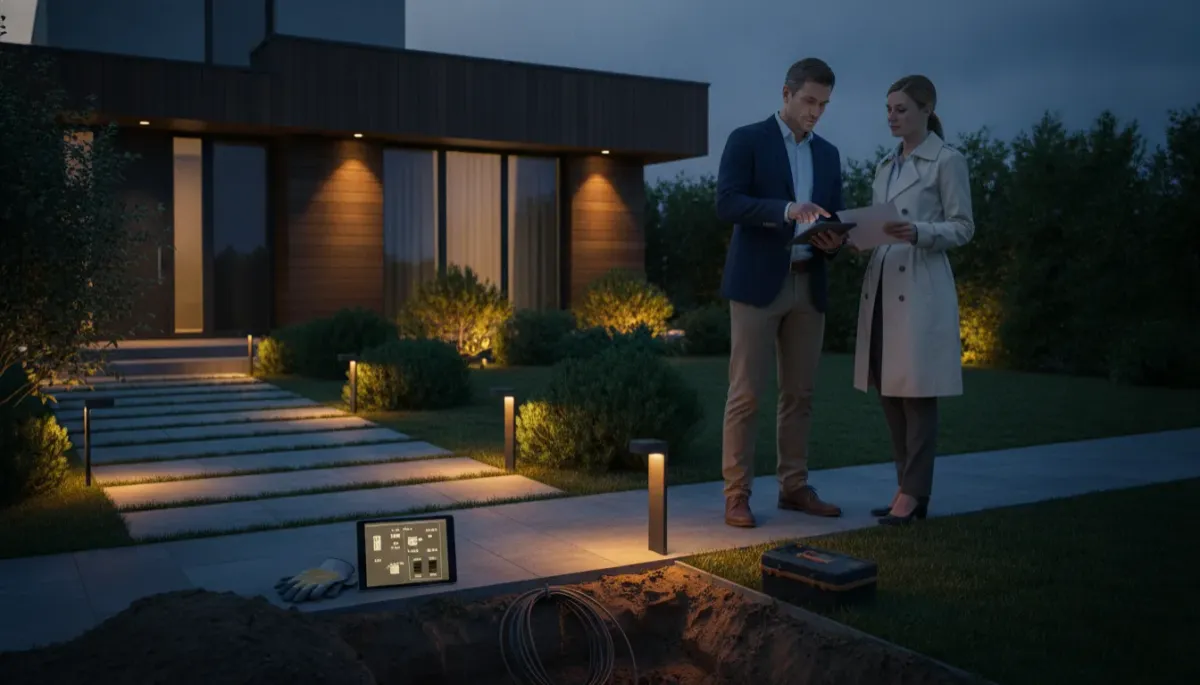
Landscape Lighting Installation Cost: What to Expect
The cost of outdoor lighting can vary widely, and the lowest estimate is not always the best value. Your landscape lighting installation cost should account for the quality of the fixtures, the experience of the installer, the wiring plan, the control system, and the work required to protect your existing property. Difficult soil, mature trees, slopes, concrete, pavers, and limited access can all increase labor. So can features such as multiple lighting zones, phone control, voice-assistant access, and color-changing fixtures. Whether you want safer walkways, better curb appeal, or a more comfortable place to entertain, this guide will help you understand what you’re paying for.
Key Takeaways
Set a realistic budget: Professional landscape lighting often costs $2,000 to $4,500, while larger properties and detailed designs can exceed $25,000.
Review the full project scope: Fixture types, wiring, transformer capacity, smart controls, trenching, site access, and landscape restoration all influence the final price.
Compare value, not just totals: Request itemized quotes, prioritize essential areas, plan for maintenance and future expansion, and explore financing or phased installation when needed.
What Is the Average Landscape Lighting Installation Cost?
Landscape lighting installation can cost anywhere from a few hundred dollars for a small DIY kit to more than $25,000 for a large, highly customized property. Most homeowners planning a professionally designed residential system can expect to spend approximately $2,000 to $4,500. The final price depends on the number and type of fixtures, wiring requirements, control options, property size, and condition of the landscape.
The estimates below provide a starting point rather than a guaranteed project price. Local labor rates, soil conditions, access, existing hardscape, and the complexity of the design can all affect the total. For additional examples and pricing ranges, review this landscape lighting cost guide.
A professional quote should explain what is included, such as fixture selection, lighting design, transformer sizing, cable installation, programming, aiming, cleanup, and warranty coverage. Comparing these details is more useful than comparing one total price alone. A lower quote may not include the same equipment or level of service as a more comprehensive installation.
DIY kits and small low-voltage systems: $200–$1,500 in materials
A small DIY system may cost about $200 to $1,500 in materials, depending on the number and quality of fixtures. Basic kits with a transformer, cable, connectors, and several lights often fall toward the lower end of that range. A larger kit with higher-quality LED fixtures, extra cable, and better controls may cost more.
DIY installation can work well for a small garden bed, short walkway, or a few accent lights near a front entry. However, the kit price usually does not include tools, replacement connectors, extra cable, or time spent troubleshooting uneven brightness and loose connections.
You will also need to plan fixture placement carefully. A light that is too bright, poorly aimed, or positioned too close to a walkway can create glare instead of comfortable illumination. For a simple project, low-voltage lighting is generally more practical than line-voltage lighting, but it still requires weather-resistant connections and careful cable placement.
Small professional installations: About $1,100–$3,000
A small professionally installed system typically costs about $1,100 to $3,000. This range may cover a transformer, five or six fixtures, LED lamps, wiring, installation labor, and basic programming. Regional examples place a small package with approximately 200 feet of wire near the middle of this range, depending on the equipment and site conditions.
Professional installation includes more than attaching lights and connecting a transformer. An installer evaluates viewing angles, fixture spacing, glare, voltage distribution, and the areas that need the most illumination. They can also conceal wiring more neatly and test the system after installation.
This option may suit a homeowner who wants lighting at the entry, along a walkway, around a patio, or near a few architectural features. Ask for an itemized quote so you can see whether the price includes design, installation, aiming, programming, cleanup, and warranty coverage.
Typical custom residential projects: About $2,000–$4,500
A custom residential landscape lighting project often costs about $2,000 to $4,500, with many homeowners spending close to $3,250. This budget generally allows for more fixtures, improved placement, higher-quality LED equipment, and multiple lighting zones.
A custom system may combine pathway lights, accent lights, uplights for trees, wall-wash fixtures, and entry or security lighting. Rather than illuminating every part of the property equally, the design directs attention toward key features while providing practical visibility where people walk and gather.
The design process also affects the price. A professional may create separate zones for the front yard, backyard, pool area, driveway, and patio. This allows you to operate each area independently and create different settings for everyday use, entertaining, or security. Outdoor Lights + Shades offers custom outdoor lighting solutions for homeowners in Los Angeles, the Temecula Valley, and the Dallas Metroplex.
Larger or highly customized properties: $5,000–$25,000+
Large properties and elaborate lighting designs can cost $5,000 to $25,000 or more. The higher range is common when a project includes many fixtures, long cable runs, multiple transformers, complex terrain, extensive hardscape, or advanced control systems.
A large installation may include lighting for mature trees, retaining walls, driveways, outdoor kitchens, pools, patios, architectural details, and expansive walkways. Color-changing fixtures, lighting scenes, integrated controls, and high-end finishes can add to equipment and programming costs.
Site complexity also plays a major role. A steep property, dense landscaping, stonework, concrete, or limited access can require more labor than an open, level yard. Before comparing quotes, ask each installer to explain which parts of the design are driving the price. Outdoor Lights + Shades’ project gallery shows examples of different outdoor lighting approaches and property sizes.
Installed landscape lighting cost per fixture: About $100–$200
A general estimate for installed landscape lighting is about $100 to $200 per fixture. This figure may include the fixture, LED lamp, a portion of the wiring, installation labor, aiming, and system testing. It is useful for early budgeting, but it should not be treated as a fixed price.
Fixture type makes a difference. A basic pathway light may cost less to install than a high-quality architectural spotlight, in-ground well light, or color-changing fixture. Installation is also more involved when a light must be mounted to masonry, placed in dense planting, or connected across a long cable run.
The per-fixture price may rise when the project requires trenching, hardscape removal, additional transformers, smart controls, or repairs to existing wiring. Installing several fixtures during one project may reduce the average labor cost per light because the crew can complete related work more efficiently.
How fixture counts affect project price
The number of fixtures usually affects the total project price, but fixture count alone does not tell the whole story. A system with seven to 10 lights may cost roughly $2,000 to $3,250, while a 20-fixture system may cost around $4,000. These ranges vary based on fixture quality, layout, cable length, controls, and site conditions.
Adding lights also increases the need for correct transformer sizing and balanced wiring. Too many fixtures on one run can lead to dim or inconsistent output, while poor placement can make a yard look overly bright. A thoughtful design may use fewer fixtures with better aiming instead of placing lights throughout the property.
When planning your budget, group fixtures by purpose. For example, count pathway lights separately from tree uplights, patio lights, and security fixtures. This gives you a clearer idea of where your money is going and makes it easier to phase the work if the full project does not fit your budget.
A simple landscape lighting cost formula
For an initial estimate, multiply the expected number of installed fixtures by $100 to $200. Then add costs for design, transformers, controls, trenching, hardscape work, and electrical upgrades.
For example, a 12-fixture system might start at approximately $1,200 to $2,400 in fixture-related installation costs. If the project also includes smart controls, difficult trenching, multiple zones, or repairs to existing landscaping, the final quote will be higher.
You can estimate labor separately as well. Landscape lighting labor commonly ranges from about $45 to $100 per hour, although local rates and project complexity vary. This landscape lighting pricing resource provides additional guidance on fixture and labor costs.
Use this formula only as a planning tool. A site visit is the most reliable way to account for cable routes, soil, slopes, existing electrical service, drainage, and the design details that make your system look polished after dark.
What Factors Affect Landscape Lighting Installation Cost?
Landscape lighting installation cost depends on much more than the number of fixtures in your yard. A professional estimate may include fixture selection, wiring, transformer capacity, trenching, site conditions, labor, controls, and restoration. The right system should balance appearance, safety, performance, and long-term reliability rather than simply adding as many lights as possible.
A small, level yard may need only a few pathway or accent fixtures. A larger property with mature trees, retaining walls, outdoor entertaining areas, slopes, and multiple zones requires more planning and installation time. Local labor rates and electrical requirements can also affect the final price. For context, professional landscape lighting estimates often vary widely because every property has different design and access requirements.
Before requesting quotes, think about how you want to use each outdoor area. Do you want safer walkways, stronger curb appeal, better visibility near gates, or a more comfortable setting for evening entertaining? A clear plan helps an installer recommend the right fixtures and avoid unnecessary equipment. Outdoor Lights + Shades provides custom outdoor lighting solutions for homeowners in Los Angeles, the Temecula Valley, and the Dallas Metroplex.
Fixture number, type, and placement
The number of fixtures directly affects material and labor costs. Professional-grade fixtures often cost about $100 to $350 each when installed, depending on their design, construction, light output, and purpose. A project with six carefully placed fixtures will usually cost less than one requiring 20 or more lights across several areas.
Placement matters just as much as quantity. Fixtures may need to sit at different distances from the transformer, fit around planting beds, or mount near architectural features. Installers also aim each light to reduce glare, dark spots, and unnecessary light spill. Thoughtful placement can create a stronger result with fewer fixtures, which is why a custom design may provide better value than a basic kit. Review installed fixture cost ranges when comparing estimates.
Pathway, accent, wall-wash, security, and architectural lighting
Different lighting goals call for different fixture styles and installation methods. Pathway lights help define walkways and steps, while spotlights or well lights can highlight trees, sculptures, entry features, and other focal points. Wall-wash fixtures spread light across vertical surfaces, while security lights may require wider coverage around gates, garages, side yards, and other areas.
Architectural lighting often requires precise spacing and aiming. A system with seven to 10 lights may cost around $2,000 to $3,250, while a 20-light system may cost about $4,000, depending on the equipment and property. Combining several fixture types can add design time, but it can also make the property feel more cohesive. The Outdoor Lights + Shades gallery shows how layered lighting can shape different outdoor settings.
Fixture materials, finishes, brightness, and beam spread
Fixture construction affects both the initial price and expected service life. Aluminum fixtures may offer a lower-cost option, while brass and copper fixtures generally cost more and may provide greater durability in demanding outdoor conditions. The finish also influences the daytime appearance of visible fixtures, particularly around entryways, patios, and pathways.
Brightness and beam spread are equally important. A narrow beam can draw attention to a tree trunk, column, or architectural detail. A wider beam may suit a wall, planting bed, or open area. Higher output is not always better, since excessive brightness can create glare and make the space less comfortable. A professional installer may recommend different lumen levels and beam angles throughout the property to produce balanced illumination. Commercial-grade fixture materials can also affect the material portion of your estimate.
LED fixtures, transformers, wiring, and voltage drop
LED fixtures are common in landscape lighting because they generally use less energy and last longer than older lamp types. The complete system still includes a transformer, low-voltage cable, connectors, junctions, and installation labor. A transformer may cost about $200 to $400, with the appropriate capacity determined by the number and wattage of the fixtures.
Voltage drop can affect light output when cable runs are long or the system is not planned correctly. Fixtures farther from the transformer may appear dimmer if the cable size, wiring layout, or load distribution is inadequate. An installer can divide fixtures across circuits, select the proper transformer capacity, and test the system after dark. These steps help maintain consistent brightness throughout the property. The transformer and wiring requirements should appear clearly in an itemized estimate.
Yard size, access, slopes, soil, and existing landscaping
The size of your property affects the amount of cable, equipment, and labor required. Larger yards may need multiple transformer locations or separate circuits to maintain even performance. A flat, open lawn is usually easier to work in than a property with steep slopes, dense planting, mature trees, retaining walls, or narrow side yards.
Access can affect installation time, too. Crews may need to work around irrigation lines, pools, outdoor structures, and established hardscape. Dense or compacted soil can make cable placement more difficult, while rocky ground may require additional tools or labor. A site visit helps identify these conditions before a quote is prepared. Many professional low-voltage LED systems cost between $2,000 and $6,000, though complex properties may cost more, as noted in this landscape lighting cost guide.
Trenching, hardscape removal, drainage, and restoration
Landscape lighting cable may need to pass beneath planting beds, turf, walkways, driveways, or other surfaces. During installation, the crew must place wiring at a suitable depth, protect connections, and avoid irrigation and utility lines. The work becomes more involved when cable crosses concrete, masonry, stone, or other hardscape.
Some properties require pavers, mulch, turf, or plants to be moved before wiring can be installed. Drainage conditions may also affect where fixtures and connections can go. Afterward, the work area may need to be refilled, leveled, replanted, or cleaned. Ask whether trenching, hardscape removal, cleanup, and restoration are included in the estimate. This makes it easier to compare proposals and avoid unexpected charges related to trenching and installation labor.
Design complexity, lighting zones, and smart controls
A basic system may operate from one timer, while a custom installation can include separate zones for pathways, patios, architectural features, trees, and security coverage. More zones require additional planning, wiring, programming, and testing. They also let you manage different areas according to how you use the property.
Smart controls may increase the upfront cost but make the system easier to manage. Depending on the equipment, you may be able to adjust schedules, dim fixtures, create scenes, or control lighting from a phone or voice assistant. Outdoor Lights + Shades offers smart landscape lighting controls as part of a complete outdoor system. The appropriate setup depends on your entertaining habits, preferred schedules, and the amount of control you want over each area.
Local labor rates, permits, and electrical requirements
Labor rates vary by location, project complexity, and installer experience. Landscape lighting labor may range from about $45 to $100 per hour, although many companies provide a project-based quote instead. Extensive wiring, difficult access, detailed nighttime aiming, and multiple control zones generally require more labor than a simple installation. The landscape lighting labor cost range can provide a useful starting point when reviewing estimates.
Permits and electrical requirements can also affect the final price. Low-voltage lighting is typically less involved than line-voltage work, but local rules may still apply when the installation connects to existing electrical equipment or requires upgrades. An installer may need to assess outdoor outlets, grounding, transformer placement, circuit capacity, and weather protection. Ask whether permits, inspections, electrical modifications, and code-related work are included in the proposal. The Outdoor Lights + Shades FAQ answers common questions before you request a custom estimate.
Which Landscape Lighting System Fits Your Budget?
Your budget depends on more than the number of fixtures you want. The power source, fixture quality, wiring plan, control features, property layout, and installation requirements can all affect the final price. A small solar setup may cost less upfront, while a professionally designed low-voltage LED system can provide more consistent light, better coverage, and easier control.
Compare the complete system instead of looking only at the price of individual fixtures. Consider how often you will use the lighting, which areas need dependable illumination, and whether you want to add smart controls or fixtures later. A professional assessment can help you choose a system that suits your property, priorities, and budget. Outdoor Lights + Shades serves homeowners in Los Angeles, the Temecula Valley, and the Dallas Metroplex with custom lighting design and installation.
Low-voltage landscape lighting: Flexible installation and safer operation
Low-voltage lighting is a popular choice for residential landscapes because it offers installation flexibility without relying on the same electrical infrastructure as line-voltage lighting. A transformer reduces standard household power to a lower voltage, commonly 12 volts, before electricity reaches the outdoor fixtures. This can simplify installation and reduce the system’s electricity demand.
Professionally installed low-voltage landscape lighting often costs about $90 to $150 per fixture, according to HomeAdvisor’s landscape lighting cost guide. The final price depends on fixture type, wire length, trenching, transformer capacity, and site access.
Low-voltage systems work well for pathways, planting beds, trees, patios, and architectural details. A designer can also create separate zones, allowing brighter security lights to operate independently from softer accent lighting. Professional installation remains important for waterproof connections, proper cable placement, voltage consistency, and dependable nighttime performance.
Line-voltage landscape lighting: Higher labor and code requirements
Line-voltage systems use a property’s standard 120-volt electrical supply. They can support powerful floodlights and other high-output fixtures, making them useful for large areas, security applications, sports courts, and some architectural installations. However, they generally require more planning and closer attention to electrical codes than low-voltage systems.
Installation may involve dedicated circuits, conduit, junction boxes, poles, weather-resistant components, and inspections. Labor costs can also increase when an electrician must work around finished hardscaping or connect new equipment to the main electrical panel. As a reference point, HomeAdvisor reports that installing a floodlight can cost about $250 to $800, with additional expenses possible when a separate pole is needed.
Because line-voltage work carries greater electrical risks, a qualified professional should handle the installation. A site assessment can determine whether this system is appropriate or whether low-voltage fixtures can provide the coverage you need with less disruption and complexity.
Solar landscape lighting: Lower wiring costs with performance trade-offs
Solar landscape lights can reduce installation costs because they do not require underground wiring, a transformer, or a connection to your home’s electrical system. They can work well for small paths, garden borders, and areas where trenching would be difficult. Since each fixture has its own solar panel and battery, installation may involve little more than positioning and securing the lights.
Homeowners typically pay about $100 to $200 per installed solar fixture. A DIY project with 10 solar lights may cost up to $1,500, according to LawnStarter’s landscape lighting research. Prices vary based on brightness, battery capacity, materials, and overall design.
Solar lighting also has limitations. Shade from trees, walls, or rooflines can reduce charging, while cloudy conditions may shorten nighttime run time. Solar fixtures may produce less consistent brightness than wired systems, especially when you need dependable illumination for steps, walkways, or security. They can be a practical addition, but they may not replace a complete professionally designed system.
LED landscape lighting: Upfront cost versus long-term energy savings
LED fixtures often cost more upfront than basic incandescent or halogen options, but they use less energy and can last much longer. Their lower energy demand makes them a practical choice for systems that run every evening. LED technology is available in path lights, spotlights, wall washers, step lights, tree lights, and architectural fixtures, giving designers many ways to create a balanced plan.
One published example places materials for a commercial-grade LED system at about $1,400 and labor at about $1,600, for a total near $3,000. The Tru-Scapes cost example includes LED fixtures, a smart transformer, wire, connectors, installation, and design consultation.
When comparing systems, look beyond wattage. Color temperature, beam spread, brightness, glare control, fixture placement, and serviceability all affect the result. A quality LED design should make pathways easy to see, highlight important features, and limit light shining into windows or neighboring properties.
Smart landscape lighting controls: Timers, zones, phone, and voice access
Smart controls add convenience and more precise scheduling to a landscape lighting system. Instead of relying on a basic timer, you can schedule lights by time, sunset, sunrise, or custom scenes. Separate zones can operate independently, allowing pathway lights, entertaining areas, accent fixtures, and security lighting to follow different schedules.
Depending on the equipment, you may be able to adjust settings from a phone or use voice commands through a compatible assistant. This makes it easier to turn on lights for guests, change a holiday schedule, or check the system while you are away. Smart controls can also help prevent lights from running longer than necessary.
The control system must support the number of fixtures and zones you plan to use. If a transformer lacks capacity, adding a larger or additional transformer may cost about $200 to $400, according to GroundSource’s installation cost guide. Planning for future expansion can help prevent unnecessary rewiring later.
How fixture quality affects system cost and lifespan
Fixture quality affects both the initial price of your landscape lighting system and its performance over time. Professional-grade fixtures commonly cost about $100 to $350 each installed, according to Vision Outdoor Lighting’s cost guide. Path lights are generally less expensive, while adjustable tree spotlights, underwater lights, and specialty architectural fixtures tend to cost more.
Look for durable materials, sealed connections, corrosion resistance, stable mounting hardware, and finishes suited to your climate. Coastal properties may need additional protection from salt air. In hot regions, heat-resistant materials and dependable LED components can support a longer service life.
The least expensive fixture is not always the most economical choice over time. Frequent replacements, water intrusion, fading finishes, poor beam control, and difficult repairs can add maintenance and labor costs. A professional design from Outdoor Lights + Shades can match each fixture to its location and purpose, helping your budget go toward lighting that performs well and looks intentional.
What Costs Should You Plan for Beyond Installation?
The installation quote is only one part of the total cost of landscape lighting. Your long-term budget may also include electricity, cleaning, inspections, repairs, replacement fixtures, and adjustments as your landscape changes. Planning for these expenses early helps you choose a system that fits both your property and your expectations.
Project costs vary based on the property’s size, fixture count, design complexity, material quality, and site conditions. According to Vision Outdoor Lighting’s cost guide, residential projects can range from approximately $2,000 to more than $25,000. A larger allowance may be appropriate for extensive properties, newly landscaped yards, or homes with multiple hardscape areas.
A professional lighting plan should account for more than the number of fixtures. It should also consider how the system will operate, who will maintain it, and whether you may expand it later. Ask for an itemized proposal that explains equipment, labor, controls, restoration, warranty coverage, and any possible additional charges. This makes it easier to compare proposals and identify costs that may fall outside the initial installation.
Electricity use and seasonal operating costs
Landscape lighting adds to your home’s electricity use, but LED fixtures generally keep operating costs manageable. Your total depends on the number of fixtures, their wattage, how long they run each night, and your local utility rate. A system with 20 low-wattage LED fixtures may use significantly less electricity than one with older, higher-wattage bulbs.
Timers, astronomical controls, and smart scheduling can prevent the lights from running longer than necessary. You can set them to turn on around sunset, shut off at a chosen time, or operate different zones according to your routine. This is useful when pathways need light every evening, while entertainment areas only need illumination when guests are present.
The fixture type also affects energy costs. HomeAdvisor’s landscape lighting data reports that metal halide bulbs can cost three times more to operate than LED bulbs with the same lumen output. Ask your installer to estimate annual electricity use before choosing the system.
Cleaning, inspections, aiming, and routine maintenance
Outdoor fixtures collect dust, pollen, leaves, and residue from irrigation. That buildup can soften the light, change its appearance, or block the beam. Periodic cleaning helps fixtures continue illuminating pathways, trees, architectural features, and outdoor gathering areas as intended.
Fixtures can also shift after heavy rain, soil movement, gardening, or contact with lawn equipment. A light that once highlighted a tree may begin shining toward a window or creating glare across a patio. Routine aiming keeps the design balanced and helps direct light where it provides the most value.
A maintenance visit may include cleaning lenses, checking connections, inspecting wire runs, testing the transformer, adjusting fixture positions, and reviewing timers or smart controls. These services add a recurring cost, but they help preserve the original design and support safe movement after dark. Well-maintained lighting can also contribute to curb appeal, security, and more usable outdoor time, as Tru-Scapes explains.
Repairs, replacement parts, and warranty coverage
Even a professionally designed system may need repairs. Common issues include damaged connections, water intrusion, failed transformers, cracked housings, and LED components that no longer perform properly. Irrigation work, landscaping, construction, and storms can also damage fixtures or wiring.
Replacement costs depend on the component and the system’s quality. A basic fixture may cost less to replace, while architectural-grade brass or copper fixtures can represent a larger investment. Smart transformers, controllers, and specialty components may also require compatible parts.
Before signing a proposal, ask what the warranty covers and how long it lasts. Some warranties apply only to fixtures, while others include transformers, wiring, labor, or installation workmanship. Confirm whether service calls, shipping, and replacement labor are included. A consumer-grade kit may cost less at first, but it may offer fewer repair options and less support than a professional system. Tru-Scapes compares these differences between consumer-grade kits and professional installations.
Permits, electrical upgrades, and code-related work
Many low-voltage landscape lighting projects have different requirements from line-voltage installations, but local rules still matter. Depending on the project, you may need permits, approved equipment, properly protected cable, weatherproof connections, or an electrical inspection. Your installer should identify these requirements before work begins.
An older electrical panel may also need attention if it cannot safely support the planned equipment. Additional work could include installing a dedicated circuit, replacing an outdoor receptacle, improving grounding, or upgrading weather protection. These items may not appear in a basic fixture-and-wiring estimate.
Labor costs can increase when a project requires extensive wiring, trenching, voltage testing, or nighttime adjustments. One industry estimate places many residential projects between eight and 20 labor hours, with rates of $75 to $125 per hour, depending on the work involved. Request an itemized proposal that separates fixtures, wiring, controls, labor, permits, and electrical upgrades.
Landscape and hardscape repairs after trenching
Hardwired lighting systems often require shallow trenches for cable placement. On a lawn or garden bed, restoration may involve replacing disturbed soil, reseeding grass, replanting ground cover, or resetting edging. These repairs are usually manageable, but they should still be part of your project budget.
Costs can rise when wiring crosses a driveway, paver walkway, retaining wall, concrete path, or another finished surface. The installer may need to remove and replace sections of hardscape, use specialized boring methods, or route the cable around an obstruction. Rocky soil, tree roots, steep slopes, and dense clay can also make trenching slower and more labor intensive.
Discuss the proposed cable route before work starts. A professional may be able to reduce restoration work by using planting beds, landscape borders, expansion joints, or other accessible paths. LawnStarter’s landscape lighting guide recommends leaving hardwired outdoor systems to qualified professionals, particularly when wiring and site conditions are complex.
Future fixtures, additional zones, and system expansion
Many homeowners begin with the front entry, driveway, or patio and add other areas later. You may eventually want tree uplighting, pathway fixtures, pool-area lighting, outdoor kitchen lighting, or a dedicated entertainment zone. Planning for expansion during the first installation can reduce future labor and restoration costs.
Ask whether the transformer has enough capacity for additional fixtures and whether the cable layout can support another zone. It may be more cost-effective to install a larger transformer, conduit, or accessible connection point at the beginning than to replace or reroute the system later. Your installer can also leave room in the control setup for additional schedules and scenes.
A phased plan lets you complete the most important areas first while keeping the overall design consistent. For context, Tru-Scapes reports that many homeowners spend between $2,000 and $6,000 on a professional low-voltage LED system, although larger properties and detailed designs can cost considerably more.
Adjustments after plant, tree, or hardscape changes
Landscape lighting is designed around the property as it exists during installation. As trees grow, shrubs fill out, and new plantings mature, the original light angles may no longer produce the intended effect. A fixture that once highlighted a small tree may become blocked by branches, while a pathway light may disappear behind ground cover.
Renovation projects can create similar changes. A new pergola, retaining wall, pool deck, outdoor kitchen, or seating area may block existing light or create a need for additional fixtures. In some cases, a fixture only needs to be moved or re-aimed. In others, you may need new wiring, a different beam spread, or another lighting zone.
Tell your landscaping contractor where existing fixtures and cables are located before digging. Marking the system can help prevent accidental damage. Since fixture count and type have a direct effect on project pricing, as Vision Outdoor Lighting explains, request a separate estimate before making larger lighting changes.
A contingency for unexpected site conditions
Set aside a contingency for conditions that are difficult to identify before excavation begins. Hidden roots, buried concrete, drainage lines, rocky soil, unstable slopes, and undocumented utilities can change the installation plan. Older wiring or damaged electrical components may also need replacement after the site is inspected.
A contingency does not mean you should expect the quote to increase. It gives you flexibility if the property requires additional labor or materials. The appropriate amount depends on the project, but a complex property generally deserves a larger allowance than a small, accessible yard. Vision Outdoor Lighting’s pricing overview shows how significantly property size, fixture count, materials, and design complexity can affect total cost.
Ask how unexpected work will be handled before installation starts. A reputable contractor should explain which conditions could affect the price and request approval before performing additional work. Outdoor Lights + Shades provides custom outdoor lighting design and installation for homeowners in Los Angeles, the Temecula Valley, and the Dallas Metroplex. Visit the Outdoor Lights + Shades FAQ or request a consultation to discuss your property, lighting goals, and expected costs.
Is DIY Landscape Lighting Installation Cheaper?
DIY landscape lighting can cost less upfront, especially when you install a few solar fixtures or a small low-voltage kit. However, the purchase price is only part of the total cost. Tools, wiring, waterproof connections, troubleshooting, and your own time can affect what you ultimately spend.
A simple project may be a good fit for a capable homeowner. A custom system with multiple zones, architectural accents, smart controls, or hardwired components requires more planning and technical work. Before choosing DIY, consider the size of your property, the lighting effect you want, and how important consistent coverage and long-term reliability are to you.
When a simple low-voltage kit fits a DIY budget
A basic DIY project can make financial sense when you want to light a short walkway, define a small garden bed, or add a few decorative fixtures near an entryway. Solar lights and plug-in low-voltage kits usually require fewer materials and less installation time than a professionally designed system.
According to LawnStarter’s landscape lighting cost guide, homeowners may spend up to $1,500 on a DIY project with 10 solar lights. That estimate may not include replacement batteries, extension cables, upgraded stakes, or installation tools.
DIY works best when the layout is straightforward and your expectations are modest. If you want even illumination across a large property, coordinated lighting zones, or fixtures that highlight trees, walls, and architectural details, a basic kit may not produce the look you want. Test the lights after dark before permanently burying cable or securing fixtures.
Hidden DIY costs: Tools, troubleshooting, and rework
The price printed on a lighting kit does not account for every item needed to install it correctly. Depending on the project, you may need trenching tools, wire cutters, waterproof connectors, wire crimpers, a voltage tester, and materials for securing cable. Caudill’s landscape lighting cost calculator notes that many homeowners do not already have these tools.
Troubleshooting can add more expense. A fixture that flickers or fails to turn on may have a loose connection, damaged cable, incorrect transformer setting, or excessive voltage drop. Finding the issue may require uncovering buried wire or redoing several connections.
Rework is common when fixture locations are chosen before testing the system at night. Moving lights, replacing connectors, and restoring disturbed soil can quickly reduce your savings. Your time also has value, particularly if the project takes several weekends instead of a single afternoon.
Waterproof connections, cable placement, and low-voltage safety
Outdoor lighting connections must withstand rain, irrigation, soil moisture, temperature changes, and lawn equipment. Poorly sealed connections can corrode over time, causing intermittent lights or complete circuit failures. Cable should be routed carefully and kept away from areas where edging tools, shovels, aerators, and other equipment could damage it.
Low-voltage systems are more accessible for DIY installation, but “low voltage” does not mean “no safety concerns.” Turn off the power before working on the system, follow the manufacturer’s instructions, and use outdoor-rated components. Avoid burying cable too shallowly or placing it where standing water collects.
Solar and battery-powered fixtures are generally simpler to install. Hardwired outdoor systems require more care, particularly when household electrical power or line-voltage connections are involved. LawnStarter recommends hiring a qualified electrician for this type of work.
Why qualified professionals should handle line-voltage work
Line-voltage lighting connects to your home’s standard electrical supply and typically involves stricter safety and code requirements than a low-voltage kit. Floodlights, large exterior fixtures, new electrical circuits, and pole-mounted lights may require proper wiring, grounding, weatherproof boxes, and permits.
The cost also depends on the site. HomeAdvisor’s outdoor lighting cost guide reports that installing a floodlight can cost between $250 and $800. A new pole or other supporting infrastructure can increase the total.
A qualified electrician can determine whether your electrical system can support the installation, protect connections from weather, and complete the work according to local requirements. This is not a good place to cut corners. An installation mistake can create shock, fire, equipment damage, or inspection concerns.
How professional design improves coverage and glare control
Landscape lighting is not simply a matter of placing the brightest fixtures around the yard. Effective design considers what should be visible, where people walk, how light travels across different surfaces, and how to prevent glare into windows or neighboring properties.
A professional may combine pathway lights, accent fixtures, wall washers, downlights, and architectural lighting to create depth without making the property look overlit. Fixture spacing, beam spread, mounting height, and aiming all affect the final appearance.
Professional landscape lighting can also support curb appeal and perceived property value, according to Vision Outdoor Lighting’s installation cost overview. A thoughtful plan helps you focus your budget on high-impact areas instead of adding fixtures that create uneven brightness or unnecessary glare.
Transformer sizing, wiring, programming, and system testing
A landscape lighting transformer must provide enough capacity for the fixtures connected to it, with room for reliable operation and potential future additions. An undersized transformer can limit performance, while a poorly configured system can make programming and expansion more difficult.
Wire length and layout matter as well. GroundSource explains that lights can become dimmer as the distance from the 110 to 120-volt supply and transformer increases. Correct cable sizing and thoughtful circuit planning help maintain consistent brightness across the property.
A professional installation typically includes transformer placement, wire routing, fixture connections, timer or smart-control programming, and nighttime testing. Testing after dark makes it easier to identify dark areas, glare, uneven spacing, and fixtures that need to be aimed differently.
Outdoor Lights + Shades installation in Los Angeles, the Temecula Valley, and the Dallas Metroplex
Outdoor Lights + Shades helps homeowners create custom outdoor lighting systems throughout Los Angeles, the Temecula Valley, and the Dallas Metroplex. The team manages the process from design and fixture selection through installation, programming, and final testing.
Most homeowners spend between $2,000 and $6,000 for a professional low-voltage LED landscape lighting system, according to Tru-Scapes’ landscape lighting cost guide. Your price will depend on fixture count, property layout, wiring requirements, controls, and design goals.
Whether you want safer pathways, a more welcoming entry, improved nighttime entertaining, or phone and voice-assistant control, Outdoor Lights + Shades can plan a system around your property. Browse the Outdoor Lights + Shades gallery to view completed projects, or request a custom estimate for your home.
How Can You Estimate and Manage Landscape Lighting Costs?
A landscape lighting budget is easier to manage when you define the project before choosing fixtures. Start by deciding what you want the system to accomplish. You may want to highlight mature trees, illuminate walkways, make the patio more comfortable after sunset, or improve visibility around entry points. Each goal affects fixture types, placement, controls, wiring, and labor.
Next, review the property as a whole. Mark architectural features, planting beds, steps, retaining walls, entertaining areas, and darker sections of the yard. Grouping these areas into lighting zones gives you a clearer picture of the project and lets you control different sections independently.
A professional consultation can help identify glare, shadows, and coverage issues before installation begins. The Tru-Scapes landscape lighting cost guide recommends assessing the property, goals, and fixture locations before developing a detailed estimate. Use this planning stage to set priorities, compare options, and decide whether the work should happen all at once or in phases.
Define goals for curb appeal, pathways, entertaining, and security
Begin with a short list of practical goals. For curb appeal, you might highlight the front entry, mature trees, columns, or architectural details. For safety, focus on walkways, stairs, changes in elevation, and areas where guests move after dark. Entertaining spaces may need softer illumination around seating, dining, cooking, and pool areas.
Security lighting calls for a different approach. The goal is clear visibility without creating harsh glare for your family, neighbors, or security cameras. Write down your highest priorities and rank them. This helps you spend money on the areas that matter most instead of spreading fixtures evenly across the property.
Your goals also help a lighting designer recommend appropriate beam spreads, brightness levels, and control settings. A well-planned system should feel balanced and comfortable, not overly bright or visually busy.
Map the property and group fixtures into lighting zones
Create a basic property map showing the home, pathways, planting beds, trees, walls, steps, gates, and outdoor living areas. You do not need a professional drawing at this stage. A marked-up site plan or aerial image can help identify potential fixture locations and estimate cable runs.
Then divide the property into zones, such as the front entry, driveway, backyard, patio, pool, side yard, and security areas. Zoning lets you operate only the lights you need at a given time. For example, pathway lights can remain on during evening arrivals while accent lighting turns off later.
A professional installer can refine the map by accounting for sightlines, mature plant growth, transformer placement, and wire routing. Outdoor Lights + Shades offers custom outdoor lighting solutions designed around the home, property layout, and homeowner preferences.
Use a cost calculator for an initial estimate
A cost calculator can help you create a starting budget before requesting contractor quotes. Enter an estimated fixture count, project size, system type, and expected labor rate when those details are available. The result will not replace a site visit, but it can show whether your plans fit a small, medium, or large project range.
Remember that online estimates often leave out site-specific work. Sloped yards, hardscape, dense plantings, difficult access, long wire runs, and electrical upgrades can change the final price. Smart controls and premium fixtures may also add to the initial estimate.
Use a calculator as a planning tool rather than a final price. The Caudill’s landscape lighting cost calculator can help organize the factors that commonly affect outdoor lighting expenses.
Include lighting in the broader landscape budget
If you are renovating the yard, include landscape lighting from the beginning instead of treating it as an afterthought. A lighting plan may affect planting locations, retaining walls, irrigation work, patios, walkways, and other construction decisions. Installing wire before hardscape is completed can reduce future disruption and repair costs.
As a general planning guideline, some landscape professionals recommend setting aside about 10% to 20% of the overall landscape budget for lighting. The right percentage depends on the property size, number of illuminated features, and quality of the system.
The CAST Lighting budgeting guidance can help you view lighting as part of the complete landscape design. Ask your landscape contractor and lighting professional to coordinate their plans before construction begins.
Request an itemized landscape lighting quote
An itemized quote should show more than one total project price. Ask the contractor to list fixtures, transformers, wire, connectors, controls, labor, design work, trenching, programming, testing, and restoration work. This makes it easier to understand the scope and compare proposals fairly.
The quote should identify the number and type of fixtures included. For example, a proposal might separate path lights, uplights, downlights, wall-wash fixtures, step lights, and control equipment. Clarify whether the price includes aiming and adjustments after installation.
Ask what could change the price after work begins. A reputable contractor should explain assumptions about access, soil, existing electrical service, and hardscape. A personalized consultation is the best way to develop an accurate estimate, as explained by Vision Outdoor Lighting.
Compare fixtures, labor, controls, maintenance, and warranty coverage
When comparing proposals, look beyond the fixture count. Two systems may include the same number of lights but differ in housing materials, lenses, brightness control, wire quality, transformer capacity, and installation methods. Ask whether the fixtures are designed for long-term outdoor exposure in your climate.
Review the labor scope carefully. Does it include design, trenching, waterproof connections, aiming, programming, cleanup, and a follow-up visit? Compare control options, too. A basic timer costs less than a system with multiple zones, scheduling, phone access, and voice-assistant integration.
Warranty coverage also affects the system’s long-term value. Confirm what the warranty covers, how long it lasts, and whether labor is included. Ask who handles repairs if a transformer, fixture, connector, or control system fails.
Estimate energy and maintenance costs before choosing fixtures
Landscape lighting generally uses less electricity with efficient LED fixtures, but operating costs still depend on wattage, fixture count, and nightly runtime. Ask your installer to estimate the system’s total wattage and expected schedule. This gives you a more realistic view of ongoing electricity use.
Maintenance may include cleaning lenses, removing leaves, checking connections, aiming fixtures, replacing damaged components, and correcting lights hidden by plant growth. Trees and shrubs can gradually change the effect of a carefully designed system.
Factor in access when estimating maintenance. Fixtures near planting beds may be easy to reach, while lights in steep or crowded areas may require more time to service. HomeAdvisor explains how bulb replacement and operating costs contribute to the long-term expense in its outdoor lighting cost guide.
Prioritize high-impact areas when your budget is limited
A smaller, well-designed system can create more impact than a large installation with poorly placed fixtures. Start with areas that provide several benefits at once, such as the front entry, main walkway, driveway, patio, or a prominent tree. These locations can improve visibility, appearance, and nighttime usability.
You can also focus on features visible from inside the home or from the street. Lighting a courtyard, front elevation, or outdoor dining area may provide more value than placing fixtures in hidden sections of the property.
Ask your designer to create a priority plan with essential, recommended, and optional elements. This gives you a clear way to reduce the initial scope without abandoning the overall design. CAST Lighting recommends selecting an area of importance when homeowners need to manage a limited landscape lighting budget.
Phase the installation when a full project exceeds your budget
Phasing lets you complete the project over time while keeping the design consistent. Start with a master plan showing the final layout, then install the most important zones first. A common first phase may include the front entry, walkways, driveway, and main entertaining area.
Before approving the first phase, confirm that the transformer and wiring plan can support future additions. Otherwise, later work may require replacing equipment or disturbing completed landscaping. Your installer should document unused capacity, wire routes, and planned expansion points.
Phasing can also align with other property improvements. For example, you might install wiring near a future patio during a hardscape project, then add fixtures once construction is complete. This approach can reduce duplicated labor and limit disruption to finished surfaces.
Plan future expansion before installing the transformer and wiring
Tell your installer about possible future additions, even if they are not part of the current budget. You may later want to light a pool, pergola, outdoor kitchen, side yard, detached garage, or newly planted trees. That information can influence transformer sizing, wire routes, zone planning, and control equipment.
A system with little remaining capacity may require costly changes when you expand. Ask whether the transformer has room for additional load and whether the wiring layout can serve future zones. Your installer should explain how much spare capacity is appropriate for the planned system.
Keep a record of fixture models, wire locations, transformer settings, and control programming. This information makes future service and expansion easier. Planning ahead does not require installing every fixture now, but it can prevent avoidable rework later.
Use customer financing to manage upfront costs
A custom lighting system is a long-term home improvement, but the upfront cost may compete with other household priorities. Customer financing can let you spread payments over an agreed period rather than paying the entire project cost at once.
Before choosing a financing option, review the payment amount, term, interest rate, fees, promotional conditions, and requirements for early repayment. Make sure the monthly payment fits comfortably within your budget. Financing should support a well-planned project, not encourage you to install more than you need.
Outdoor Lights + Shades offers customer financing options for eligible homeowners. Ask about current terms during your consultation and request a clear breakdown of the financed amount, payment schedule, and total repayment.
Request a custom estimate from Outdoor Lights + Shades
Online price ranges can help you start planning, but a property-specific estimate provides a more useful picture. Outdoor Lights + Shades can assess your home, discuss your goals, recommend lighting zones, and identify fixtures and controls that fit the space.
During the consultation, share your priorities, preferred lighting style, entertaining plans, security concerns, and future projects. Ask for an itemized proposal that explains design, installation, controls, warranty coverage, and ongoing service. You can also review completed projects in the company’s outdoor lighting gallery to compare styles and applications.
Outdoor Lights + Shades serves homeowners in Los Angeles, the Temecula Valley, and the Dallas Metroplex. Request a custom estimate through Outdoor Lights + Shades to discuss your property and create a landscape lighting plan that matches your budget.
Related Articles
Frequently Asked Questions
How much should I budget for professional landscape lighting?
Most residential projects cost about $2,000 to $4,500, while larger or highly customized properties may exceed $25,000. The final price depends on fixture count, equipment quality, wiring, property conditions, controls, and design complexity.
Is low-voltage or solar landscape lighting better for a home?
Low-voltage lighting usually provides more consistent brightness, stronger coverage, and greater control across the property. Solar fixtures can work well for small garden areas or short paths, but shade and weather may affect their performance.
What should a landscape lighting quote include?
A detailed proposal should identify fixtures, transformers, wiring, installation labor, trenching, controls, programming, nighttime aiming, cleanup, restoration, and warranty coverage. Ask how the company handles unexpected site conditions and future system additions.
Can I install landscape lighting myself?
DIY installation may suit a small solar setup or simple low-voltage kit. Professional help is a better choice for multiple zones, smart controls, hardscape crossings, extensive wiring, or line-voltage fixtures. Proper placement and weatherproof connections are essential for reliable performance.
How can I keep landscape lighting costs within my budget?
Start with high-priority areas, such as the entry, main walkway, driveway, or patio. Ask for essential and optional recommendations, consider phasing the installation, and plan transformer capacity for future additions. Outdoor Lights + Shades also offers customer financing options for eligible homeowners.


